2026-09-25 ·
Flat-Pack vs Volumetric Modular Buildings
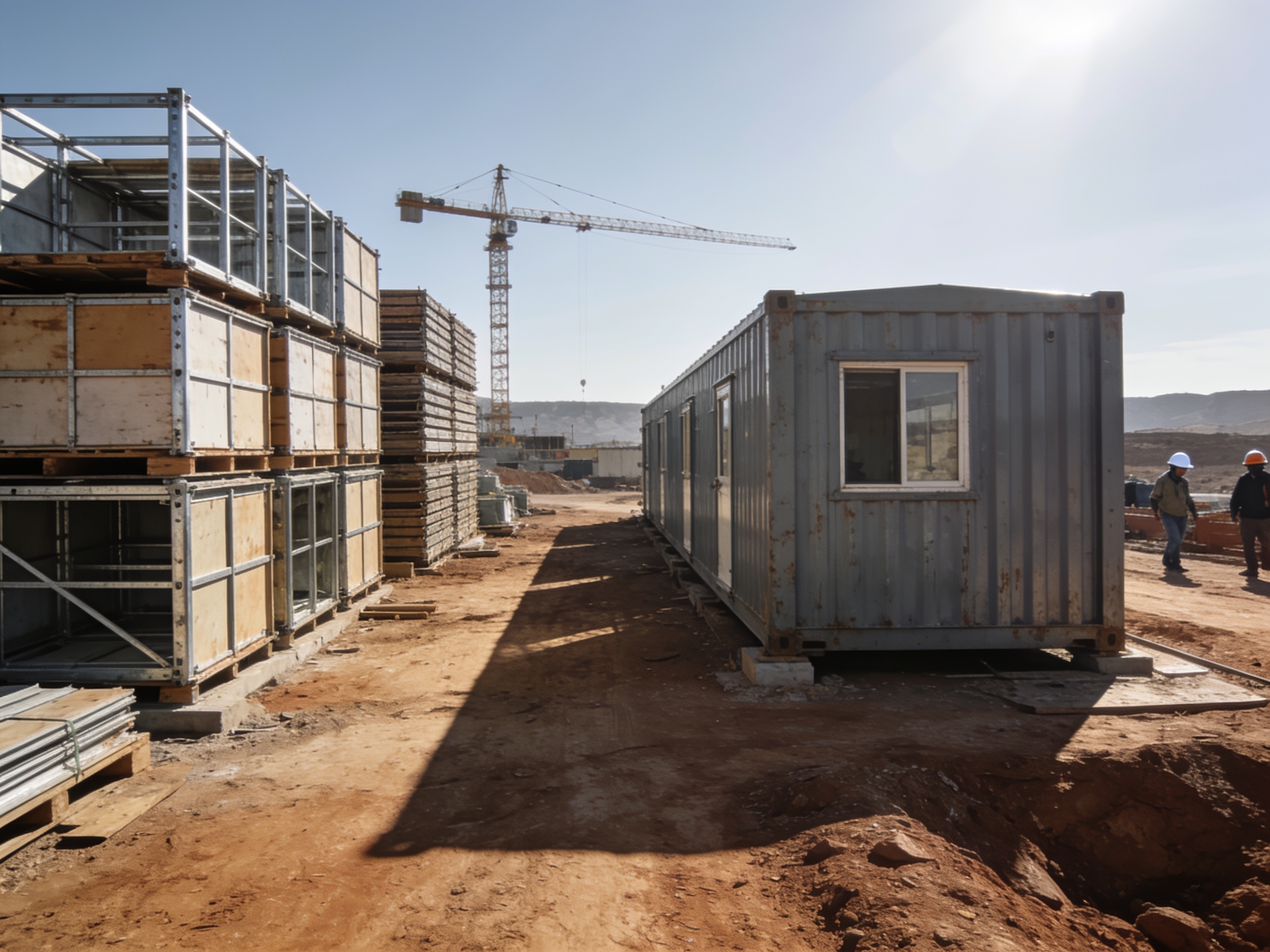
When sourcing modular buildings for industrial projects in the United Arab Emirates, understanding the distinction between flat-pack modular buildings and volumetric modular buildings is paramount. Flat-pack units, as the name suggests, are manufactured as individual components – walls, floors, roofs – and shipped disassembled, then assembled on-site. Volumetric modules, conversely, are largely complete 3D units, often including internal finishes, MEP (mechanical, electrical, and plumbing) systems, and fixtures, transported to the site as ready-to-connect boxes. The choice between these two approaches significantly impacts logistics, site preparation, assembly timelines, and overall project costs, especially in regions like the UAE where transport distances can be substantial and site conditions vary from developed industrial zones like Jebel Ali to remote desert locations for energy or infrastructure projects. For instance, a flat-pack approach might be more economical for projects requiring large quantities of simple structures or those with severe transport restrictions, while volumetric units offer faster on-site deployment for more complex facilities.
Transport and Logistics Considerations
The method of transport is a primary differentiator. Flat-pack modules are inherently optimized for shipping efficiency. Components can be stacked densely, allowing for a greater volume of building materials to be transported within standard shipping containers or on flatbed trucks. This is a significant advantage when moving materials across long distances, such as from a manufacturing facility to a remote project site in the UAE's interior or even internationally. Reduced shipping volume can translate to lower freight costs and fewer transport movements, which is particularly relevant when navigating busy logistics hubs like Port Rashid or managing convoys to remote oil and gas fields. However, this efficiency in transport is offset by the increased labor and time required for on-site assembly, as each component must be erected and joined.
Volumetric modules, while offering rapid on-site deployment, present greater logistical challenges. Being fully or partially assembled 3D units, their dimensions are often constrained by road width, bridge clearances, and vehicle weight limits. Transporting these oversized loads across the UAE's road network, especially through urban areas or to remote sites with unpaved access roads, requires careful planning, specialized heavy-haulage equipment, and often police escorts. This can lead to higher transport costs and longer lead times for logistics coordination. Project planners must consider the specific destination requirements and access routes early in the procurement process. For detailed insights into navigating these challenges, explore our article on Modular Building Logistics for Remote Industrial Projects.
On-Site Assembly and Project Sequencing
The on-site assembly process is where the inherent trade-offs between flat-pack and volumetric systems become most apparent. Flat-pack buildings demand a more traditional construction approach on-site. Foundations must be prepared, and then walls, floors, and roof panels are erected, sealed, and finished. This process requires a skilled local workforce for assembly, and the project timeline is more susceptible to weather delays, common during the UAE's summer months with extreme heat and occasional sandstorms. While the initial factory completion percentage is lower, it allows for greater flexibility in modifying the building's layout during assembly, should minor adjustments be required based on evolving site conditions or operational needs. This method is often preferred for projects where a steady, predictable pace of construction aligns with overall project sequencing and where a local labor force is readily available.
In contrast, volumetric modules are designed for rapid deployment. Once delivered to the site, they are lifted by crane and positioned onto pre-prepared foundations, then interconnected. This "plug-and-play" approach significantly reduces the on-site construction schedule, minimizing disruption and labor requirements at the project site. For projects with tight deadlines, such as emergency response facilities or rapid expansion of existing operations, volumetric modules offer a compelling advantage. The majority of the work, including internal fit-out and MEP installation, is completed in a controlled factory environment, leading to higher quality control and reduced waste. However, this also means that any design changes or modifications must be finalized much earlier in the project lifecycle, as alterations once the modules are produced can be complex and costly. This speed makes volumetric modules ideal for facilities like Modular Site Offices or Workforce Welfare Facilities where rapid establishment is critical.
Customization and Design Flexibility
The degree of customization and design flexibility also varies significantly between the two modular types. Flat-pack systems generally offer greater design adaptability. Since individual components are assembled on-site, there's more scope for creating unique layouts, integrating non-standard dimensions, or making last-minute adjustments to interior partitioning. This flexibility can be beneficial for specialized industrial applications where the exact spatial requirements might evolve during the project's planning phase or for large-scale complexes where diverse building types need to be seamlessly integrated. For instance, creating bespoke Maintenance Workshops or specialized Modular Storage Buildings might lend itself well to the flat-pack approach, allowing for specific equipment layouts or unusual clearances.
Volumetric modules, while offering less inherent design flexibility due to their pre-engineered box-like nature, can still be highly customized within their structural constraints. Customization primarily occurs during the factory production phase, where internal layouts, finishes, and specific equipment installations are integrated. Complex multi-story structures or expansive open-plan areas can be achieved by combining multiple volumetric modules. However, the dimensions of each module are typically standardized to optimize transport and manufacturing processes. Buyers must provide detailed specifications upfront to ensure the modules meet all functional, aesthetic, and regulatory requirements, including those specific to the UAE's building codes and environmental conditions. This upfront planning is crucial for facilities such as Modular Commercial Kitchens or Administration Buildings where specific workflows and occupancy needs dictate the design.
Structural Systems and Durability Considerations
Both flat-pack and volumetric modular buildings are designed for durability, but their structural systems differ. Flat-pack buildings often rely on a panelized system, where structural insulated panels (SIPs) or similar components form the walls, floor, and roof. These panels are engineered to be robust, offering excellent thermal performance and structural integrity once assembled. The connections made on-site are critical to the overall structural stability and weatherproofing. For projects in the UAE, where extreme temperatures and occasional high winds are common, the quality of these on-site connections and sealing is paramount. Specifications must account for wind loads, seismic activity (where applicable), and the thermal bridging that can occur at panel joints, especially in a high-heat environment. Understanding these requirements is essential for long-term performance, particularly for structures like Electrical and Utility Buildings housing sensitive equipment.