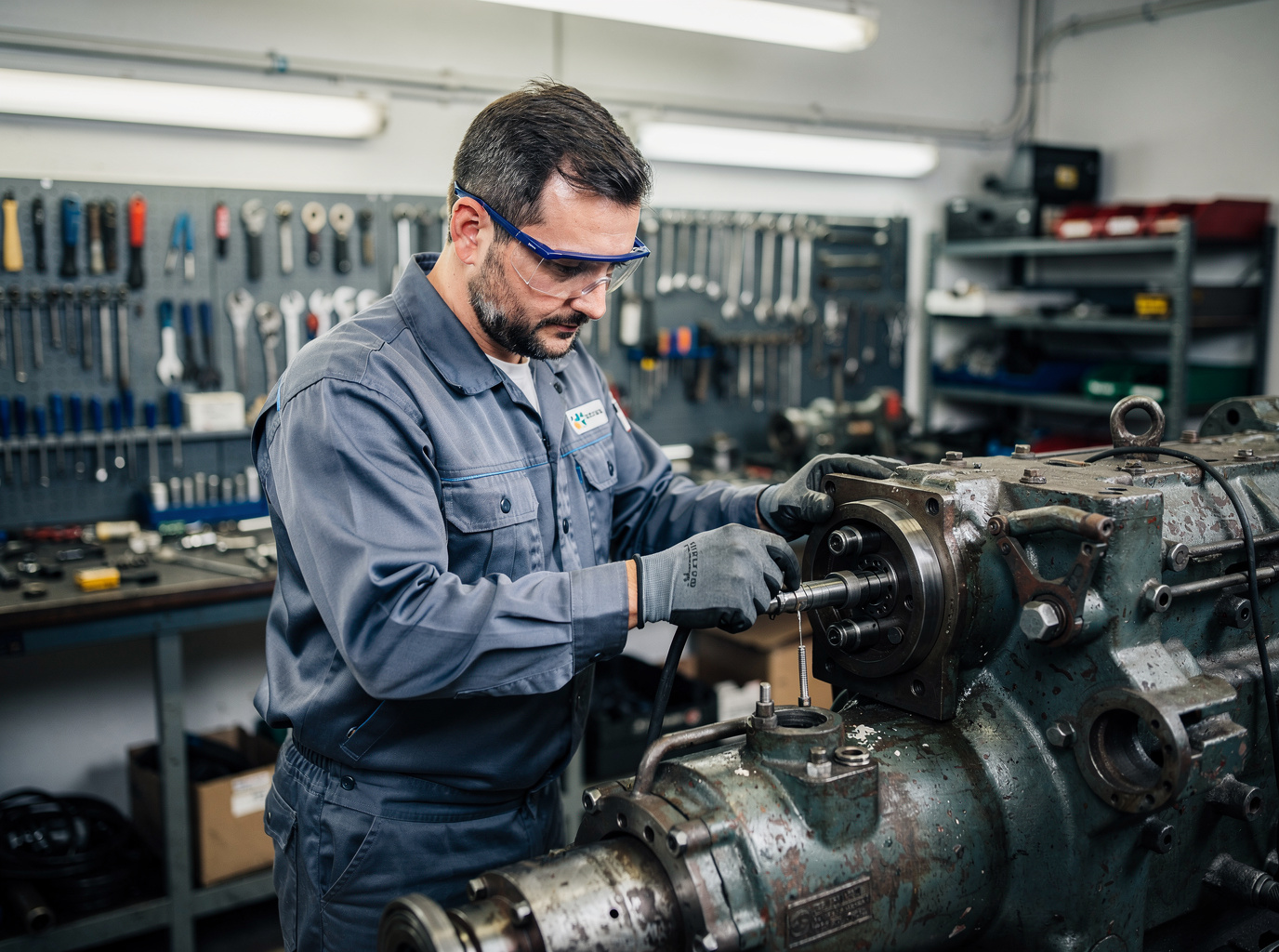
Modular maintenance workshops are crucial for supporting remote industrial operations, construction sites, and resource extraction projects. These buildings provide essential, climate-controlled spaces for equipment repair, tool storage, and personnel workspace, enabling efficient project execution in challenging environments. In the area, where projects often involve heavy machinery and continuous operation, having a dedicated, durable workshop facility close to the action significantly reduces downtime and logistical complexities. Our modular solutions are designed to withstand the rigors of industrial use, offering rapid deployment compared to traditional construction, which is vital for projects with tight schedules.
When specifying a modular maintenance workshop, key considerations include the type of equipment to be serviced, required clear span, overhead crane provisions, and the number of personnel. Structural integrity is paramount, especially for projects in the area, where wind loads or seismic activity may be factors, requiring robust steel framing and reinforced wall panels. Interior layouts can be customized to include multiple work bays, secure tool cribs, administrative offices, and even wash-down areas. We coordinate with buyers to ensure that the building’s configuration aligns with their operational workflow and equipment dimensions, providing a functional and safe working environment.
Thermal performance and MEP (Mechanical, Electrical, Plumbing) systems are critical for maintaining productivity and comfort in a maintenance workshop. High-performance insulation, often exceeding standard building codes, is essential for energy efficiency and occupant comfort. Electrical specifications must account for heavy-duty machinery, welding equipment, and specialized power tools, often requiring higher amperage services and dedicated circuits. HVAC systems need to be robust enough to handle dust, fumes, and significant temperature fluctuations, maintaining a stable internal environment. We work with buyer-supplied specifications to ensure all MEP and fire/life-safety requirements, including sprinkler systems or fire suppression, are incorporated into the building design.
Durability and transportability are inherent to our modular maintenance workshops. Materials are selected for their resistance to wear, corrosion, and impact, ensuring a long service life even in harsh industrial settings. For projects in the area, considering the logistics of transporting large modules is crucial. We coordinate the production and delivery of modules, ensuring they meet dimensional and weight constraints for over-the-road transport. The buyer and their local contractors are responsible for site preparation, foundations, crane services for unloading, and final utility connections, but we ensure the building is designed for efficient assembly and integration upon arrival.
Technician insight
In the area, the thing that catches most commercial buyers out with modular maintenance workshops is underestimating the power requirements for their specific equipment. Many assume standard industrial service is enough, but welding, heavy machinery, and specialized diagnostic tools often demand higher amperage and dedicated circuits that need to be planned for from the initial specification, not as an afterthought on site.
Modular Workshop for a Remote Mine Site
A mining operation in a remote part of the area needed a robust, rapidly deployable workshop for heavy equipment repair. The challenge was the extreme dust and temperature fluctuations. We configured a modular unit with enhanced air filtration, a positive pressure HVAC system, and a durable, easy-to-clean interior finish, allowing their team to perform critical maintenance efficiently despite the harsh conditions.
Maintenance Workshops Services We Offer
✓Heavy Equipment Repair Bays
Modular workshops configured with reinforced flooring, high bay doors, and clear spans suitable for maintaining large machinery and vehicles.
✓Tool & Parts Storage Workshops
Secure, organized modular spaces designed for the systematic storage and inventory management of specialized tools, spare parts, and consumables.
✓Welding & Fabrication Shops
Purpose-built modular units with appropriate ventilation, fire suppression, and power provisions for welding, cutting, and light fabrication activities.
✓Field Service Support Centers
Compact, rapidly deployable modular workshops providing essential repair and diagnostic capabilities for field technicians operating in remote locations.
✓Climate-Controlled Repair Facilities
Modular workshops engineered with enhanced insulation and HVAC systems to maintain optimal temperatures for sensitive equipment repair or personnel comfort in extreme climates.
How it works
- 1
1. Project Requirements Review
We begin by thoroughly reviewing your project's specific needs, including intended use, site conditions, equipment dimensions, personnel requirements, and any buyer-supplied local code or ordinance specifications. This ensures a clear understanding of the operational demands for your modular maintenance workshop.
- 2
2. Building Configuration & Specification
Based on the requirements, we work with you to configure the optimal modular building. This involves selecting structural systems, interior layouts, MEP specifications, fire/life-safety features, and material finishes that meet your project's performance and durability criteria.
- 3
3. Commercial Coordination & Production
Once specifications are finalized, we coordinate the commercial aspects and initiate production or sourcing of your modular maintenance workshop. We manage the manufacturing process to ensure the building is built to the agreed-upon design and quality standards.
- 4
4. Delivery Logistics
We coordinate the transportation of the completed modular units to your designated project site. The buyer is responsible for site preparation, foundations, unloading, and any necessary crane services upon arrival.
Pricing
The cost of a modular maintenance workshop is primarily influenced by its size, structural complexity, the degree of customization, insulation and MEP system specifications, and the chosen interior/exterior finishes. Higher structural requirements for heavy equipment, advanced HVAC for climate control, and specialized fire/life-safety systems will increase the overall investment. The quantity of modules and the project's destination also play significant roles in determining the final price.