2026-09-25 ·
Factory-Built vs Site-Built Remote Facilities
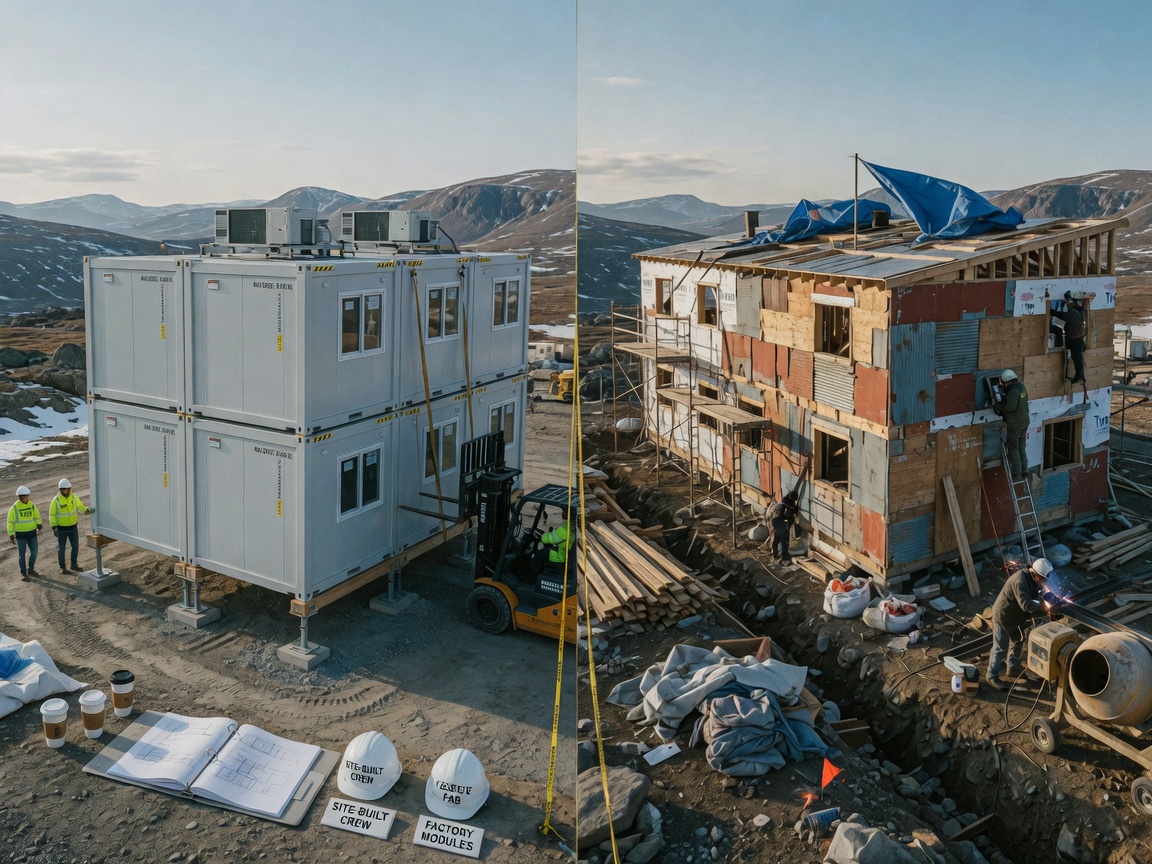
For commercial buyers, procurement teams, and project decision-makers operating in the UAE, the choice between factory-built modular facilities and site-built construction for remote projects is a critical one that impacts timelines, budgets, and operational efficiency. Factory-built modular buildings are manufactured off-site in a controlled environment, then transported and assembled at the project location. This contrasts with traditional site-built construction, where the entire building process, from foundation to finish, occurs directly on the project site. While both methods can deliver functional facilities, modular construction often provides significant advantages in terms of speed, quality control, and predictability, particularly for projects in remote or challenging locations across the UAE, such as oil and gas fields in the Western Region or large-scale infrastructure developments in Fujairah.
Understanding Modular Construction for Remote Sites
Modular construction involves manufacturing individual building sections, or modules, in a factory setting. These modules are designed to specific project requirements, which can include considerations for local climate, structural loads, and intended use. For instance, a modular facility destined for a desert environment will require robust insulation and thermal performance specifications to mitigate extreme heat, along with appropriate HVAC and MEP considerations to ensure comfort and operational efficiency. The level of factory completion can vary, from basic structural shells to fully fitted-out units complete with interior finishes, fixtures, and even furniture. This allows for a high degree of customization based on the buyer's needs, whether it's a modular workforce accommodation for a large crew or specialized modular control rooms for a technical facility.
The primary benefit of this approach is the ability to conduct site preparation and foundation work concurrently with factory production. This parallel process significantly reduces overall project timelines compared to sequential site-built construction. In the UAE, where project schedules are often aggressive, this can be a decisive factor. Furthermore, the controlled factory environment minimizes weather delays and allows for stringent quality control measures not always achievable on an exposed construction site.
Challenges and Considerations for Site-Built Construction
Site-built construction, while familiar, presents several challenges for remote projects in the UAE. Mobilizing labor, materials, and equipment to distant locations, such as those supporting mining operations in the Hajar Mountains or remote research sites, can be logistically complex and costly. The availability of skilled local labor in specific remote areas might be limited, leading to reliance on transient workforces or extensive travel arrangements. Material procurement can also be an issue, with supply chain disruptions or delays impacting project schedules. Weather conditions, particularly the intense summer heat and occasional sandstorms prevalent in the UAE, can severely impede onsite productivity and extend construction periods. Managing waste and environmental impact on remote sites also adds layers of complexity and cost.
Moreover, achieving consistent quality across multiple site-built structures, especially in large-scale workforce camps or multi-facility compounds, can be difficult. Each structure is subject to varying site conditions and supervision levels. For projects requiring rapid deployment or phased expansion, such as those supporting new industrial zones or infrastructure projects, the inherent delays and resource demands of site-built methods can become significant bottlenecks. This is particularly true for projects requiring a rapid setup of essential facilities like modular commercial kitchens or ablution and shower buildings.
Key Differentiators: Speed, Quality, and Cost Predictability
One of the most compelling arguments for factory-built modular facilities is project sequencing and speed. Because modules are built concurrently with site work, overall project completion can be significantly faster. This rapid deployment capability is crucial for projects with tight deadlines or those that need to establish operational capacity quickly. For example, a new oil and gas exploration project might require a fully functional camp within a compressed timeframe, which modular construction can often deliver more efficiently than traditional methods. The factory setting also allows for greater precision and consistency in construction, leading to higher quality and fewer defects.
Cost predictability is another major advantage. With factory production, material waste is reduced, and labor costs are often more stable. The upfront specification process for modular buildings means that a significant portion of the project cost is locked in early, reducing the likelihood of unexpected budget overruns common in site-built projects due to unforeseen site conditions, labor issues, or material price fluctuations. While the initial procurement planning for modular buildings requires detailed specifications from the buyer, this investment in planning pays off in more predictable project outcomes.
Logistics, Specifications, and Buyer Responsibilities
The successful deployment of modular buildings hinges on meticulous planning, especially concerning transport dimensions and logistics. Modules must be designed to be transportable via road, rail, or sea to the project site. In the UAE, this often means navigating specific road regulations and planning for oversized loads, especially for modules destined for remote areas outside major transport corridors like those around Jebel Ali Port or Khalifa Port. Buyers are responsible for identifying and communicating all applicable destination requirements, including any specific local codes, ordinances, or authority requirements that must be incorporated into the building specifications.