2026-09-25 ·
Planning Utilities for Large Workforce Camps
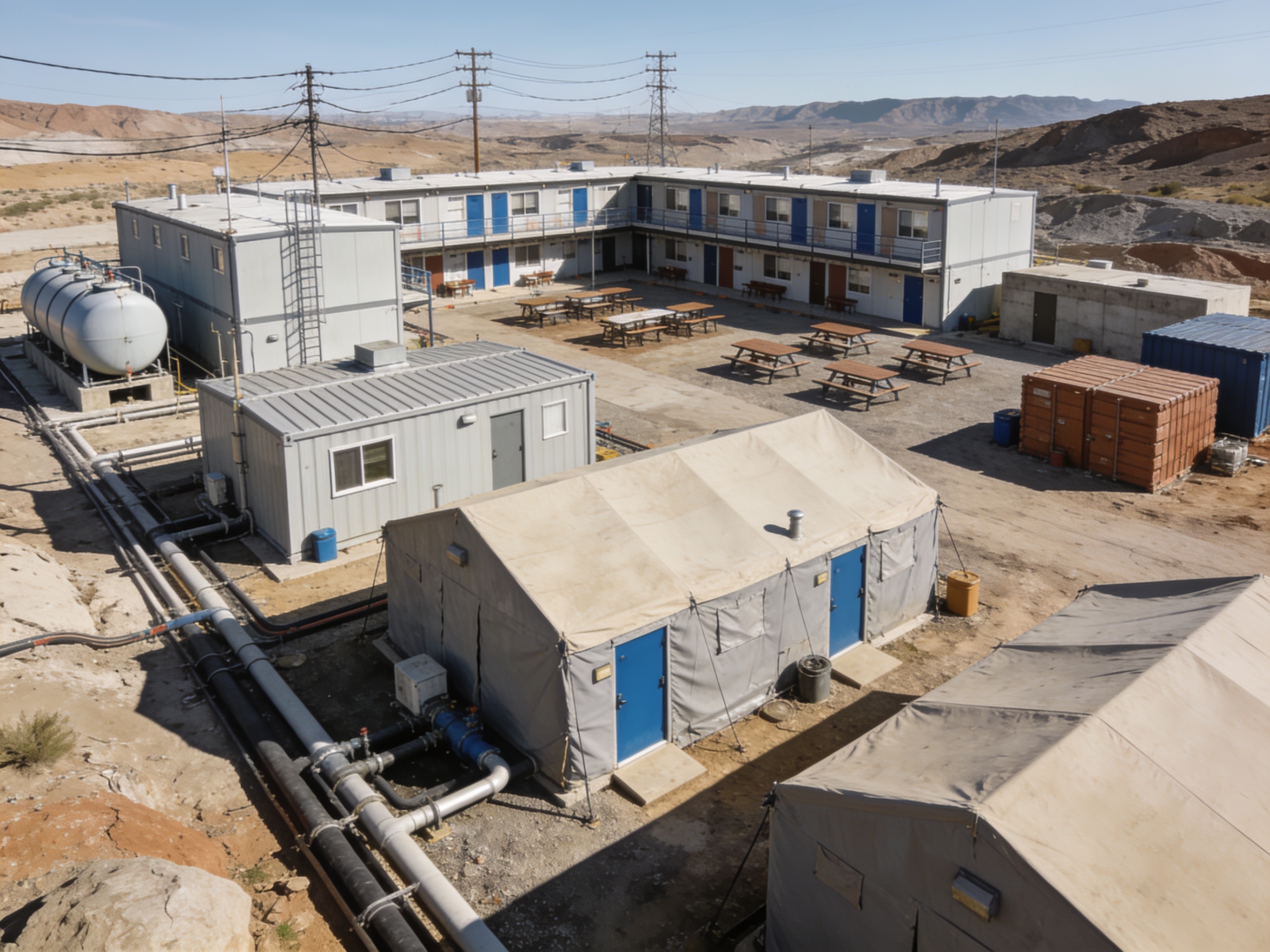
Planning utilities for large workforce camps, particularly in challenging environments like the UAE's remote project sites, demands a comprehensive and proactive approach. Unlike conventional construction, modular buildings for workforce accommodation arrive largely complete, necessitating that utility infrastructure be meticulously planned and often in place prior to module delivery. Key considerations include reliable power generation, sufficient potable water supply, effective wastewater treatment, and robust communication systems. The scale of the camp, its duration, the local climate (especially the intense heat in regions like the UAE), and the availability of existing infrastructure all dictate the complexity and cost of these utility solutions. Early engagement with modular building suppliers and local utility providers or consultants is crucial to avoid costly delays and ensure operational continuity. For projects in industrial zones or near logistics hubs outside major cities like Dubai or Abu Dhabi, where grid access might be limited, self-sufficient utility systems are often the norm.
Assessing Power Requirements for Modular Camps
Power is arguably the most critical utility for any large workforce camp, impacting everything from lighting and HVAC to kitchen operations and communication systems. For remote sites in the UAE, grid connectivity is frequently unavailable or unreliable, making on-site power generation a primary concern. The total power demand is a function of the number of personnel, the types of modular facilities (e.g., /services/modular-workforce-accommodation, /services/modular-commercial-kitchens, /services/laundry-buildings), and the specific equipment being used. This includes HVAC systems, which are particularly energy-intensive in the UAE's high temperatures, requiring robust air conditioning units. Project planners must calculate peak and average load requirements, considering redundancy for critical systems. Diesel generators are a common solution, but factors like fuel logistics, storage, and maintenance schedules must be thoroughly addressed. Integrating renewable energy sources, such as solar power, can reduce fuel consumption and operational costs, especially for longer-term projects, though this requires careful sizing and battery storage solutions to ensure continuous supply.
Water Supply and Management Strategies
Providing a consistent and safe water supply is paramount for workforce health and hygiene. In many remote UAE locations, access to municipal water networks is non-existent, necessitating alternative strategies. Water sourcing can involve drilling boreholes if groundwater is available and meets quality standards, or transporting water via tankers from approved sources. For larger camps, especially those in arid regions, desalination plants (reverse osmosis systems) can convert brackish water or seawater into potable water, though these require significant capital investment and ongoing energy. Once sourced, water must be stored in adequate capacities, often in large tanks, and distributed through a robust plumbing network within the modular buildings. Water quality testing is essential, and purification systems (filtration, UV treatment, chlorination) may be required to meet health standards. Efficient water usage, including low-flow fixtures and water recycling for non-potable uses, can significantly reduce demand and operational costs.
Wastewater Treatment and Disposal
Effective wastewater management is not just an operational necessity but also a critical environmental and regulatory compliance issue, particularly in regions with strict environmental protection guidelines. Large workforce camps generate significant volumes of sewage and greywater. On-site wastewater treatment plants (WWTPs) are typically required for remote locations. These can range from compact package plants using biological treatment processes to more advanced systems with membrane filtration, depending on the effluent quality requirements. The treated effluent may be discharged under permit, or if treated to a high enough standard, it can be reused for irrigation of non-food crops or dust suppression, further conserving water resources. Sludge management, including dewatering and disposal, must also be planned. The design of the wastewater system must account for peak flows, the chemical composition of the wastewater (e.g., from kitchens or laundries), and the specific discharge or reuse regulations applicable to the project site. Proper sizing and maintenance are crucial to prevent environmental contamination and health hazards.
Communication and Connectivity Infrastructure
In today's interconnected world, reliable communication is essential for both operational efficiency and workforce morale. For remote camps in the UAE, establishing robust communication infrastructure can be challenging. Terrestrial options like fiber optic cables or cellular networks may be unavailable or limited. Satellite internet (VSAT) is a common solution, providing connectivity for data, voice (VoIP), and sometimes even television, but it can be expensive and subject to latency. Project sites often require a combination of technologies. Within the camp, a local area network (LAN) with Wi-Fi access points is typically deployed to provide internet access to accommodation units and common areas. Beyond internet, internal communication systems, such as two-way radios or intercoms, are vital for operational coordination and emergency response. Considerations for /services/communications-buildings should be made to house and protect sensitive equipment. Planning must also account for redundancy in communication links to ensure business continuity, especially for critical operations or emergency situations.
Integrating Utilities with Modular Building Specifications
The inherent advantage of modular construction is the ability to integrate many utility elements directly into the factory-built modules. This requires close collaboration between the buyer, their local contractors, and the modular building supplier during the design and specification phase. For example, electrical panels, wiring, plumbing runs, and HVAC ducting can be pre-installed within the walls, floors, and ceilings of modular units. This significantly reduces on-site construction time and labor. Buyers must provide detailed project specifications, including anticipated utility loads, desired HVAC performance in extreme climates (like the UAE's summer heat), and any specific code or authority requirements that their local contractors must meet. While Tough Modular supplies buildings to these specifications, the buyer and their locally appointed professionals are responsible for identifying applicable local codes, ordinances, authority requirements, and ensuring that the final on-site connections and installations comply with all regulations. Understanding the interface between factory-installed elements and on-site utility connections is key to a smooth project execution. For insights into specialized requirements, consider reviewing /blog/fire-and-life-safety-planning-for-workforce-accommodation and /blog/insulation-and-building-envelope-considerations.