2026-09-25 ·
Modular Buildings for High-Altitude Projects
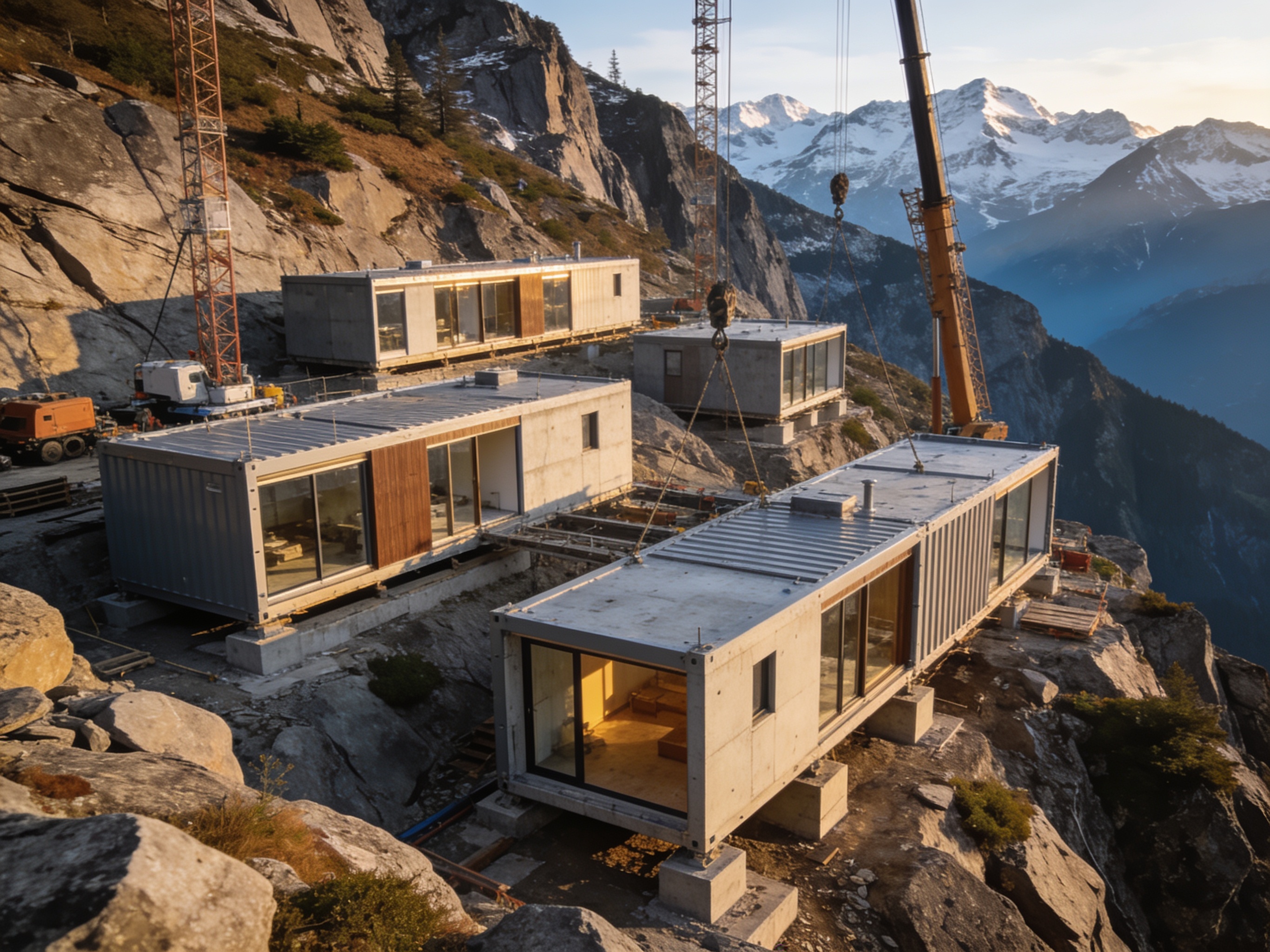
Modular buildings are highly effective for high-altitude projects due to their factory-controlled production and ability to be transported and rapidly assembled in challenging remote locations. Projects at elevations exceeding 2,000 meters, such as those found in mountainous regions or high plateaus, present unique environmental and logistical hurdles that conventional construction often struggles to overcome. These include reduced atmospheric pressure, extreme temperature fluctuations, high wind loads, and limited access for materials and personnel. By leveraging modular construction, project developers can mitigate many of these challenges, ensuring that critical infrastructure, such as workforce accommodation, site offices, and specialized facilities, can be established efficiently and reliably. The controlled manufacturing environment allows for precise engineering and material selection to meet specific high-altitude demands, reducing the risks associated with onsite construction in harsh conditions.
Structural Engineering for Reduced Atmospheric Pressure and Wind Loads
High-altitude environments impose significant structural demands on buildings. Reduced atmospheric pressure means that standard structural designs may not suffice, particularly for sealed or semi-sealed modules. The primary concern is often the differential pressure between the inside and outside of the module during transportation to and installation at high elevations, which can affect wall panels, windows, and doors. Moreover, high-altitude sites are frequently exposed to severe wind conditions. Modular buildings destined for these locations must be engineered with reinforced structural frames, often utilizing heavier gauge steel or enhanced bracing, to withstand sustained high wind speeds and turbulent gusts. Wind tunnel testing or advanced computational fluid dynamics (CFD) analysis may be specified by buyers to validate the structural integrity against local wind load requirements, which are typically more stringent at higher elevations. This ensures the safety and longevity of structures like /services/modular-site-offices or /services/modular-control-rooms.
Insulation and Thermal Performance in Extreme Cold
Extreme cold is a hallmark of many high-altitude locations. Effective insulation is paramount to maintain comfortable interior temperatures and minimize heating costs. Modular buildings for such projects typically incorporate enhanced thermal envelopes far exceeding standard specifications. This involves thicker wall, roof, and floor insulation, often using materials with high R-values such as rigid foam panels (e.g., polyisocyanurate or extruded polystyrene) or mineral wool. Double or triple-pane glazing with low-emissivity coatings and thermal breaks in window and door frames are also critical to prevent heat loss. The design must also account for thermal bridging, where structural elements can conduct heat, leading to cold spots and condensation. Proper vapor barriers and air sealing are essential to prevent moisture infiltration and maintain indoor air quality, particularly important for /services/modular-workforce-accommodation where personnel welfare is a priority.
HVAC and MEP Considerations for High Altitudes
Heating, Ventilation, and Air Conditioning (HVAC) systems in high-altitude modular buildings require specialized design. The lower air density at elevation affects the performance of standard HVAC equipment, reducing its efficiency and capacity. Systems must be oversized or specifically rated for high-altitude operation to ensure adequate heating and ventilation. For heating, robust electric heaters, hydronic systems, or high-efficiency furnaces are common. Ventilation systems need to be designed to ensure sufficient fresh air exchange without excessive heat loss, often incorporating heat recovery ventilators (HRVs). Plumbing systems must be protected from freezing, requiring proper insulation, heat tracing, and strategic placement within the building envelope. Electrical systems must also account for potential derating of components due to lower air density affecting cooling, and all Mechanical, Electrical, and Plumbing (MEP) components must be specified to withstand the unique environmental conditions and buyer-supplied code requirements for the project destination.
Fire and Life Safety Specification Considerations
Fire and life safety are critical in any remote project, but high-altitude sites can present additional challenges for emergency response. Modular buildings must be specified with robust fire suppression systems, often including sprinkler systems or fire extinguishers strategically placed. Fire-rated construction materials for walls, ceilings, and doors are essential to compartmentalize potential fires and allow for safe evacuation. Smoke detection and alarm systems, designed for the specific air density, are also vital. Egress paths must be clearly marked and kept free of obstructions. Buyers are responsible for identifying and supplying specifications that align with applicable local codes, ordinances, and authority requirements, which may include specific fire ratings or evacuation protocols based on the building's intended use, such as /services/modular-clinics or /services/training-buildings, and the project's remote location.
Transport and Logistics for Remote High-Altitude Sites
Transporting modular buildings to high-altitude sites requires meticulous planning. Access roads are often unpaved, steep, and winding, with tight turns and limited load-bearing capacity. The dimensions and weight of each module must be carefully considered to navigate these routes. Often, specialized transport vehicles, such as heavy-haul trucks with enhanced braking systems and all-wheel drive, are necessary. In some extreme cases, modules may need to be broken down into smaller components or lifted by heavy-lift helicopters, significantly impacting logistics and cost. Procurement teams must factor in potential weather delays, seasonal road closures, and customs procedures for international projects, such as those in the Andes region or the Himalayas. The factory completion level of modules also plays a role; highly finished modules reduce onsite work but require more careful transport, while flat-pack solutions may be more transportable but necessitate more extensive onsite assembly.