2026-09-25 ·
Insulation and Building Envelope Considerations
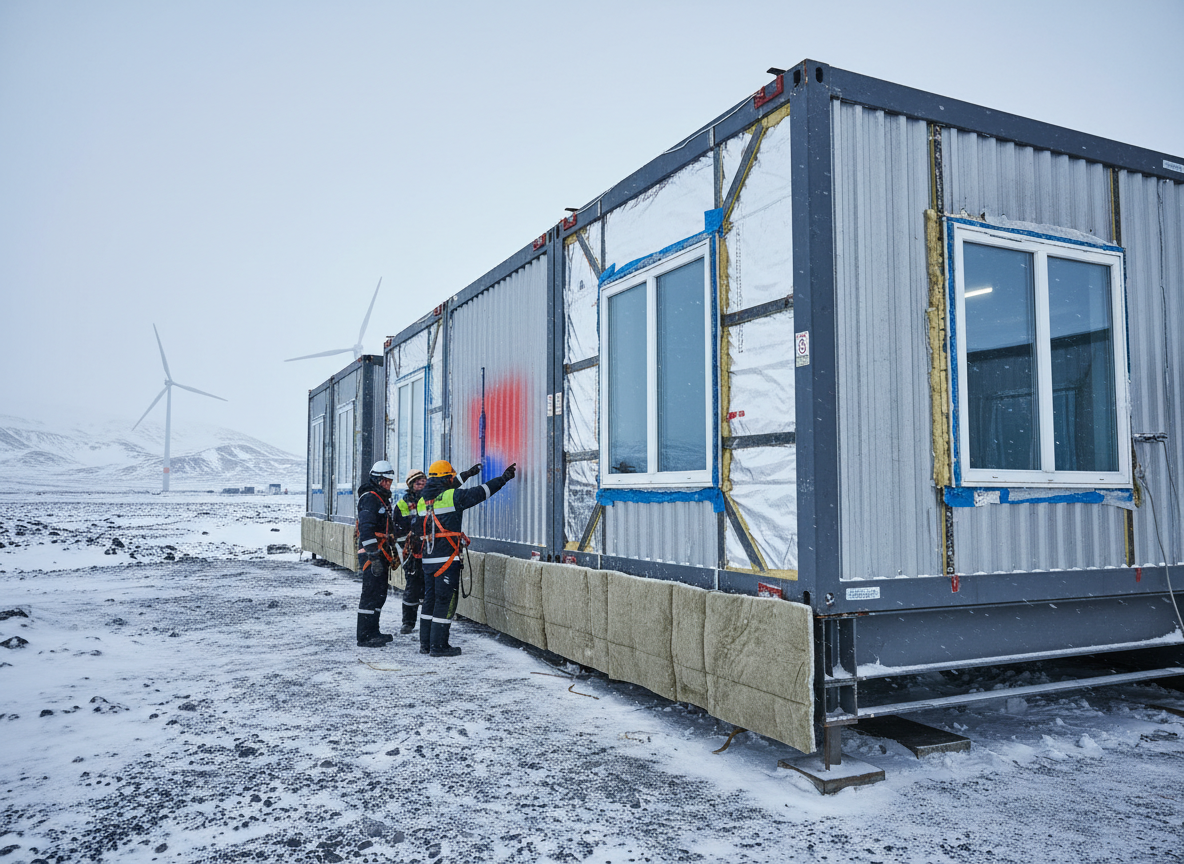
Effective insulation and a robust building envelope are paramount for modular buildings, particularly when deployed in demanding environments like the United Arab Emirates. The extreme heat, high humidity, and occasional dust storms in regions such as Jebel Ali Free Zone, Dubai Industrial City, and Al Quoz industrial areas necessitate a precise approach to thermal performance. Without meticulous attention to these elements during specification, modular structures intended for uses like <a href="/services/modular-workforce-accommodation">modular workforce accommodation</a> or <a href="/services/modular-site-offices">modular site offices</a> can suffer from excessive energy consumption for cooling, discomfort for occupants, and accelerated material degradation. The goal is to create an interior environment that remains stable and comfortable, regardless of external conditions, while minimizing operational costs over the project's lifespan. This involves a careful selection of materials, construction methodologies, and integration with the HVAC system, all tailored to the specific project requirements and destination climate.
Understanding Thermal Performance in the UAE Context
The UAE's climate, characterized by prolonged periods of intense heat often exceeding 45°C, high solar radiation, and elevated humidity, places significant demands on building envelopes. Traditional insulation values effective in temperate climates are often insufficient here. Project specifications must account for these conditions to ensure the modular building performs as intended. For instance, a modular facility destined for a remote oil and gas project in the Abu Dhabi desert will require a far more robust thermal envelope than one for a cooler, less exposed location. Key metrics like U-value (thermal transmittance) and R-value (thermal resistance) become critical. A lower U-value indicates better insulation performance, meaning less heat transfer through the building envelope. Buyers must specify target U-values for walls, roofs, and floors that are appropriate for the anticipated ambient temperatures and solar exposure, often exceeding standard requirements found in other regions. This proactive specification prevents costly retrofits or underperforming structures.
Insulation Material Selection and Application
The choice of insulation material directly impacts a modular building's thermal performance and durability. Common options include mineral wool, polyurethane (PUR), polyisocyanurate (PIR), and expanded polystyrene (EPS). Each has distinct properties regarding R-value per inch, fire resistance, moisture absorption, and cost. For the UAE's high-heat and sometimes humid conditions, materials with good thermal stability and low water absorption are often preferred. PIR and PUR foams, for example, offer high R-values in relatively thin sections, which can be advantageous for modular construction where transport dimensions are a factor. However, proper installation to avoid thermal bridging – areas where insulation is interrupted, allowing heat transfer – is crucial. This includes careful detailing around window and door frames, panel joints, and utility penetrations. The insulation system must be continuous and well-sealed to prevent air infiltration and exfiltration, which can significantly compromise thermal performance, especially in hot climates.
The Building Envelope as a System
The building envelope is more than just insulation; it's a comprehensive system comprising the exterior walls, roof, floor, windows, and doors, all working together to control heat, air, and moisture transfer. In the UAE, specialized considerations for the envelope include highly reflective roof coatings to reduce solar heat gain, and high-performance glazing for windows. Double-glazed units (DGUs) with low-emissivity (low-e) coatings are essential to minimize heat transfer through fenestration. The integrity of the envelope also extends to its ability to resist dust and sand ingress, which can be a persistent issue in areas like the Dubai Logistics City or specific industrial zones. Proper sealing of all joints and penetrations, along with robust exterior finishes, is critical. The design must also consider the potential for condensation, particularly where air-conditioned interiors meet hot, humid exteriors, to prevent moisture-related issues within the wall and roof assemblies.
HVAC Integration and Energy Efficiency
A well-designed building envelope directly reduces the load on the HVAC system, leading to significant energy savings over the operational life of the modular building. In the UAE, where cooling is the primary energy consumer, this integration is particularly vital. Specifying a high-performance envelope allows for smaller, more efficient HVAC units, reducing both capital expenditure and ongoing electricity costs. When considering <a href="/services/modular-facilities-for-large-remote-workforces">modular facilities for large remote workforces</a>, the cumulative energy savings from hundreds of individual units can be substantial. Buyers should work with their modular building supplier to ensure that the specified insulation and envelope characteristics are harmonized with the proposed HVAC design. This includes considering the placement of air conditioning units, ductwork insulation, and the overall air tightness of the structure. A poorly insulated building will inevitably lead to an overworked and inefficient HVAC system, negating potential cost savings.
Fire and Life-Safety Considerations
While thermal performance is key, insulation and building envelope materials must also meet stringent fire and life-safety requirements. These are often dictated by local codes and project-specific safety plans, which buyers are responsible for identifying and communicating in their specifications. In the UAE, as in many industrial settings, fire safety is a paramount concern, especially for <a href="/blog/fire-and-life-safety-planning-for-workforce-accommodation">workforce accommodation</a> or critical infrastructure buildings. Materials should be specified with appropriate fire ratings, flame spread indices, and smoke development characteristics. Some insulation materials, while excellent thermally, may have less favorable fire performance, requiring compensatory measures such as fire-rated linings or fire breaks. The modular construction process allows for factory-controlled installation of these components, ensuring consistent quality and adherence to specifications. However, the buyer's responsibility remains to provide the applicable fire and life-safety codes for the destination, ensuring the building is designed and produced to meet those critical standards.