2026-09-25 ·
HVAC Planning for Remote and Extreme Environments
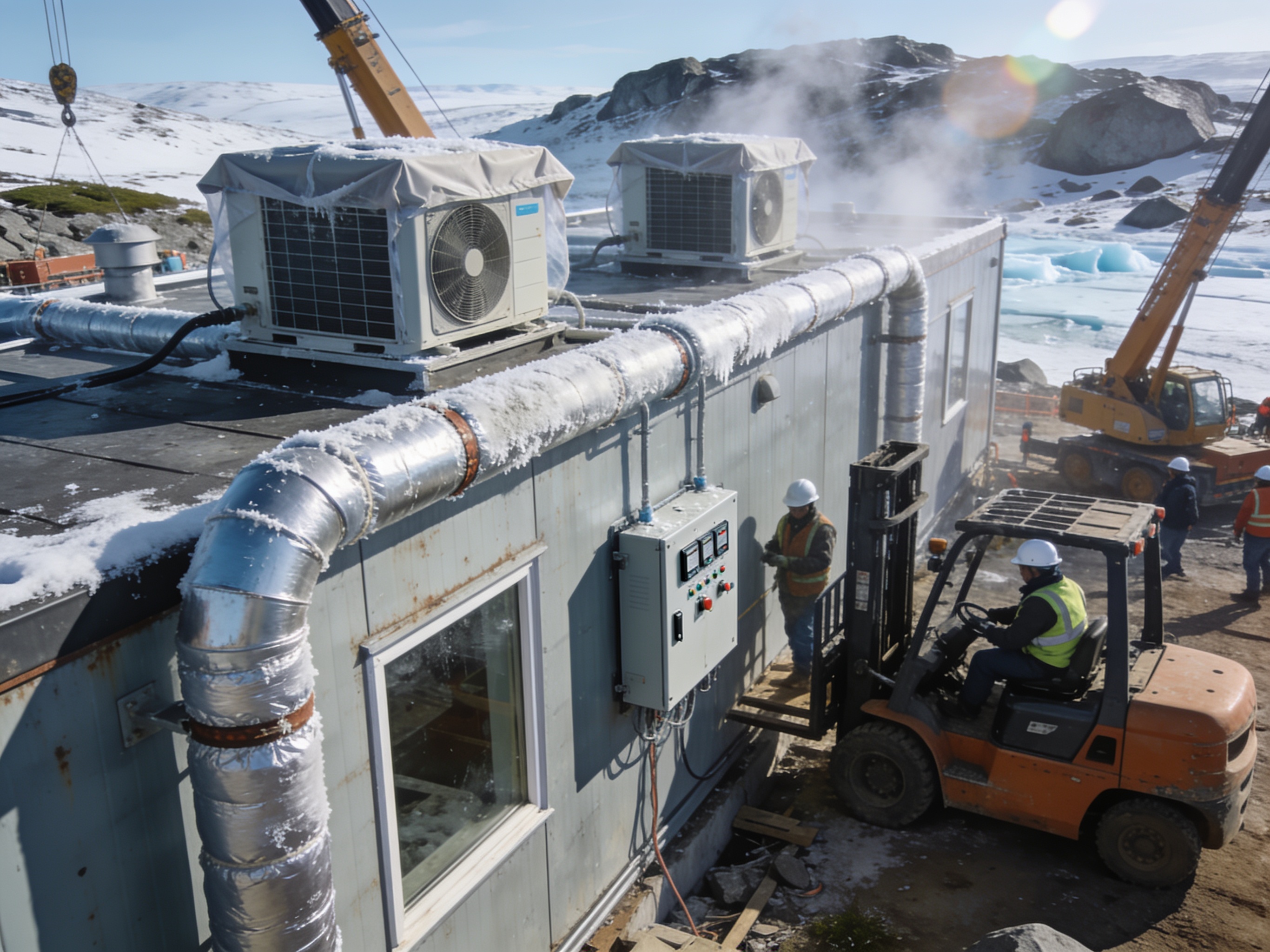
Effective HVAC planning is paramount for modular buildings destined for remote and extreme environments, as it directly impacts occupant comfort, equipment performance, and operational costs. In regions like the United Arab Emirates, where ambient temperatures can routinely exceed 45°C (113°F) for extended periods, or in high-altitude mining operations with significant diurnal temperature swings, a robust and appropriately specified HVAC system is not merely a convenience but a critical operational requirement. The challenges extend beyond just cooling or heating; they encompass dust filtration, humidity control, energy efficiency, and system reliability given limited access to maintenance and spare parts. For any <a href="/services/modular-buildings-for-mining-and-minerals">modular building for mining</a> or a <a href="/services/complete-remote-camps-and-project-compounds">complete remote camp</a>, the HVAC system must be designed from the outset to withstand these conditions, ensuring the longevity and functionality of the entire facility.
Understanding Environmental Demands
The first step in HVAC planning is a comprehensive understanding of the specific environmental demands of the project site. This includes not only peak and average temperatures but also humidity levels, solar radiation intensity, wind patterns, and the presence of airborne particulates like sand or industrial dust. For instance, projects in the UAE's industrial zones, such as Jebel Ali Free Zone or Khalifa Industrial Zone Abu Dhabi (KIZAD), face intense solar loads and high humidity, necessitating HVAC systems with superior dehumidification capabilities and robust filtration. Conversely, a project in a high-altitude desert region might experience scorching days and near-freezing nights, requiring a system capable of efficient heating and cooling, often within the same 24-hour cycle. The building's intended use also dictates requirements; a <a href="/services/modular-clinics">modular clinic</a> will have different air quality and temperature stability needs than a <a href="/services/modular-storage-buildings">modular storage building</a>.
Key environmental factors to consider include:
- Ambient Temperature Ranges: Both maximum and minimum temperatures, including extreme highs and lows.
- Relative Humidity: Average and peak humidity levels, crucial for preventing mold and ensuring comfort.
- Solar Heat Gain: The intensity of solar radiation, especially critical for buildings with large window areas or dark exterior finishes.
- Dust and Particulates: The prevalence of sand, industrial dust, or other airborne contaminants that can clog filters and damage equipment.
- Wind Conditions: Wind can impact heat transfer through the building envelope and affect outdoor unit performance.
HVAC System Types and Selection
Selecting the appropriate HVAC system type is fundamental. The choice often balances upfront cost, operational efficiency, maintenance requirements, and the specific environmental conditions. Common options for modular buildings include split systems, packaged rooftop units (RTUs), and variable refrigerant flow (VRF) systems.
- Split Systems: Consist of an indoor evaporator unit and an outdoor condenser unit. They are common for individual modules or smaller buildings, offering flexibility in placement. However, they require refrigerant lines to be run between units, which can be a consideration for multi-module installations.
- Packaged Rooftop Units (RTUs): Self-contained units that house all components (compressor, condenser, evaporator, fan) in a single cabinet, typically mounted on the roof. RTUs are robust, relatively easy to install, and offer good airflow. They are often preferred for larger modular complexes like <a href="/services/modular-dining-halls">modular dining halls</a> or <a href="/services/modular-workforce-accommodation">modular workforce accommodation</a> due to their scalability and ease of maintenance from the exterior.
- Variable Refrigerant Flow (VRF) Systems: Offer highly efficient heating and cooling by allowing multiple indoor units to connect to a single outdoor unit, providing individualized temperature control for different zones. While more complex initially, VRF systems can offer significant energy savings and comfort benefits, particularly for larger, multi-zone facilities like <a href="/services/administration-buildings">administration buildings</a> or <a href="/services/training-buildings">training buildings</a>.
The decision should also factor in the availability of local maintenance expertise and spare parts at the project site. Simpler, more robust systems may be preferable in extremely remote locations where specialized technicians are difficult to dispatch.
Insulation and Thermal Performance
The effectiveness of any HVAC system is heavily dependent on the building's thermal envelope. Superior insulation reduces the heating and cooling load, allowing for smaller, more efficient HVAC units and lower energy consumption. This is particularly crucial in environments with extreme temperatures. For modular buildings, common insulation materials include rigid foam panels (e.g., polyisocyanurate, extruded polystyrene) and mineral wool, chosen for their R-value (thermal resistance), fire rating, and moisture resistance.
Beyond wall and roof insulation, consider: