2026-09-25 ·
Factory Supply vs Local Site Scope
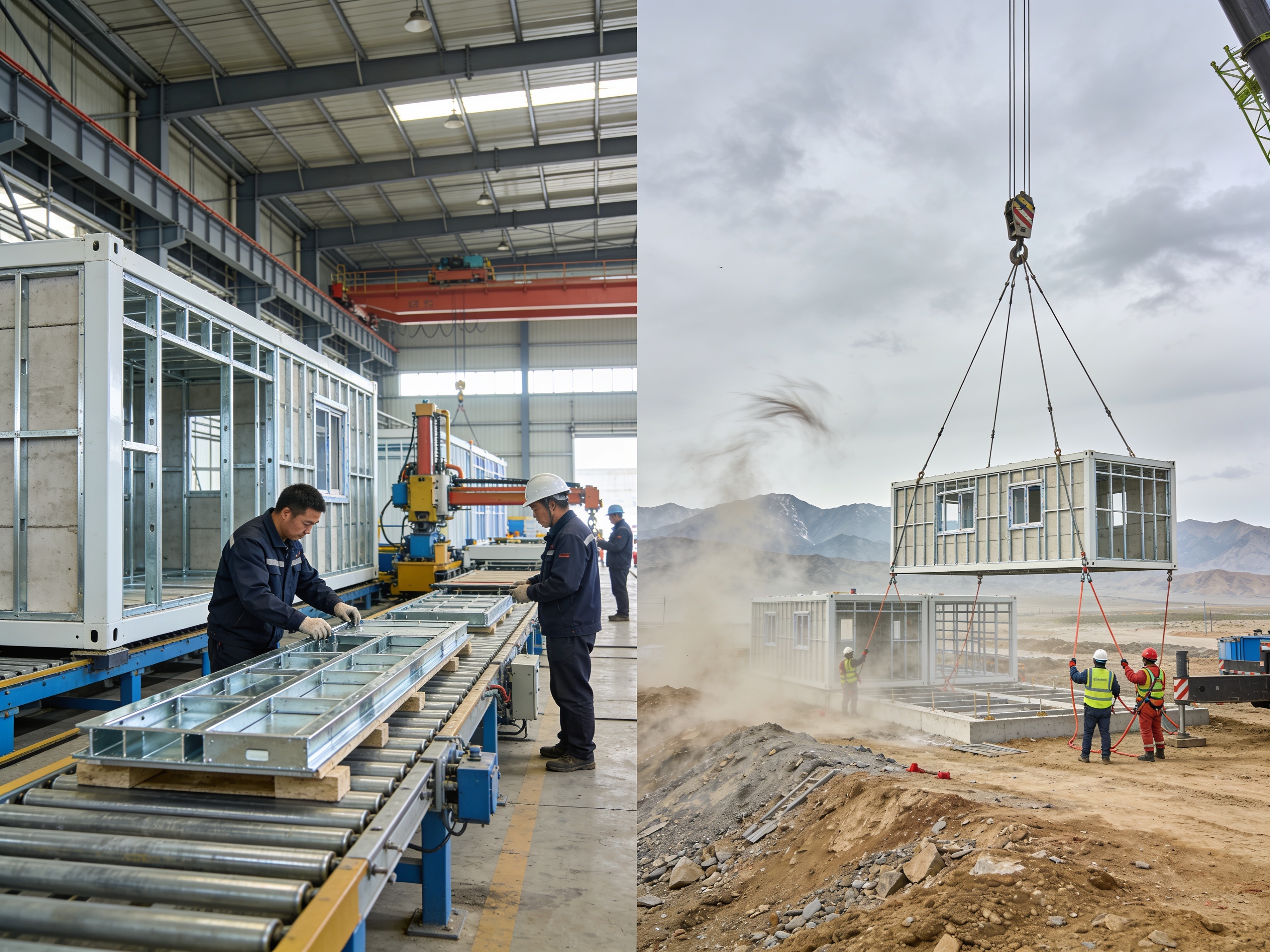
The distinction between factory supply and local site scope is fundamental for any commercial buyer procuring modular buildings, particularly for demanding projects in regions like the UAE. Factory supply encompasses the fabrication of modular units to buyer-provided specifications, ready for transport. This includes the structural integrity, specified finishes, and integrated systems designed and built within a controlled manufacturing environment. Conversely, local site scope covers all activities required once the modular units arrive at the project site, such as site preparation, foundations, utility connections, and final installation. Understanding this division is crucial for accurate budgeting, project scheduling, and risk management, preventing costly misunderstandings and delays on projects ranging from remote workforce camps in the Al Dhafra region to specialized industrial facilities in Jebel Ali Free Zone.
Understanding Factory Supply: What Tough Modular Delivers
Tough Modular's factory supply focuses on delivering high-quality, purpose-built modular units tailored to specific project requirements. This includes the complete modular building structure, interior and exterior finishes, and integrated mechanical, electrical, and plumbing (MEP) systems as specified by the buyer. For projects in the UAE, where conditions can range from the extreme heat of the Rub' al Khali desert to the humid coastal areas, specifications for insulation, thermal performance, and HVAC systems are critical. Buyers must provide these detailed specifications, often reflecting local climate conditions, operational demands, and any applicable regional codes or authority requirements. For example, a modular control room destined for a power generation facility near Ruwais might require specific fire-rated construction and advanced HVAC systems to maintain optimal internal temperatures and air quality, all of which are built into the modules at the factory.
The factory's role is to produce modules that meet these technical specifications, ensuring they are robust enough for transport and the intended operating environment. This includes structural systems designed to withstand local wind loads or seismic considerations, as provided by the buyer. Production efficiency and quality control are paramount, as modules are fabricated in a controlled environment, reducing potential weather delays and ensuring consistent build standards. The output can range from individual modules for <a href="/services/modular-site-offices">modular site offices</a> to components for extensive <a href="/services/complete-remote-camps-and-project-compounds">complete remote camps and project compounds</a>, all manufactured off-site and delivered ready for assembly.
Defining Local Site Scope: Buyer's Onsite Responsibilities
Once modular units arrive at the project site, a distinct set of responsibilities, collectively known as the local site scope, falls to the buyer and their appointed local contractors. This critical phase begins with site preparation, which involves clearing, grading, and ensuring the ground is ready for foundations. In the UAE, this might mean dealing with challenging desert terrain or coastal soil conditions, requiring specialized geotechnical assessments and earthworks. Following site preparation, the foundations must be constructed, whether they are concrete slabs, pier and beam systems, or other suitable structures designed by local engineers to support the modular buildings and comply with local building codes. These codes, which can vary across emirates, must be thoroughly researched and adhered to by the buyer.
The local site scope also includes all aspects of utility connections, such as water, wastewater, electrical power, and telecommunications. This often involves trenching, laying conduits, and making final connections to local infrastructure, all performed by licensed local contractors. Unloading and crane work for placing the modules onto the foundations, as well as the subsequent onsite assembly and installation of the modular units, are also part of the buyer's responsibility. Finally, permitting, inspections, and authority approvals from local municipalities and regulatory bodies are crucial. Buyers must ensure all onsite work complies with local regulations, including fire/life-safety requirements and environmental standards applicable to the project's location, whether it's in Dubai's industrial zones or a remote oil and gas field. Neglecting any of these steps can lead to significant project delays and cost overruns.
Key Considerations for Seamless Project Execution
Successful modular building projects hinge on clear communication and meticulous planning, especially when navigating the division between factory supply and local site scope. Buyers must provide Tough Modular with comprehensive project specifications, including any requirements arising from local codes, ordinances, climate conditions (e.g., high-temperature operation for <a href="/services/desert-and-high-heat-modular-buildings">desert and high heat modular buildings</a>), structural needs, and MEP requirements. This ensures the factory builds units that are fit for purpose and compliant with the intended destination's unique demands. For instance, a buyer planning a workforce camp in the Al Ain region would need to specify insulation values and HVAC capacities suitable for extreme summer temperatures, as well as fire suppression systems compliant with Abu Dhabi Civil Defense regulations.
Procurement planning is another critical element. Buyers should engage with local contractors early to understand the full extent of onsite work, including the availability of specialized equipment for unloading and installation, and the lead times for utility connections. Logistics and transport dimensions are also vital; while Tough Modular handles the factory-to-port logistics, buyers are responsible for onward transport from the port of entry to the project site in the UAE. This requires careful consideration of road access, permit requirements for oversized loads, and the availability of suitable transport vehicles. Clear delineation of responsibilities from the outset minimizes ambiguities and facilitates a smoother project timeline.
Customization, Scalability, and Project Sequencing
Modular construction offers significant advantages in customization and scalability, allowing buyers to specify buildings precisely for their operational needs. From <a href="/services/modular-commercial-kitchens">modular commercial kitchens</a> for large workforce camps to specialized <a href="/services/modular-control-rooms">modular control rooms</a> for industrial applications, the factory can produce units tailored to detailed functional and aesthetic requirements. This includes specific layouts, material finishes, and integration of specialized equipment. For projects requiring rapid deployment or phased expansion, modularity allows for efficient scaling. Initial phases can be deployed quickly, with additional modules added as project needs evolve, a common requirement for large-scale infrastructure or resource development projects in the UAE.