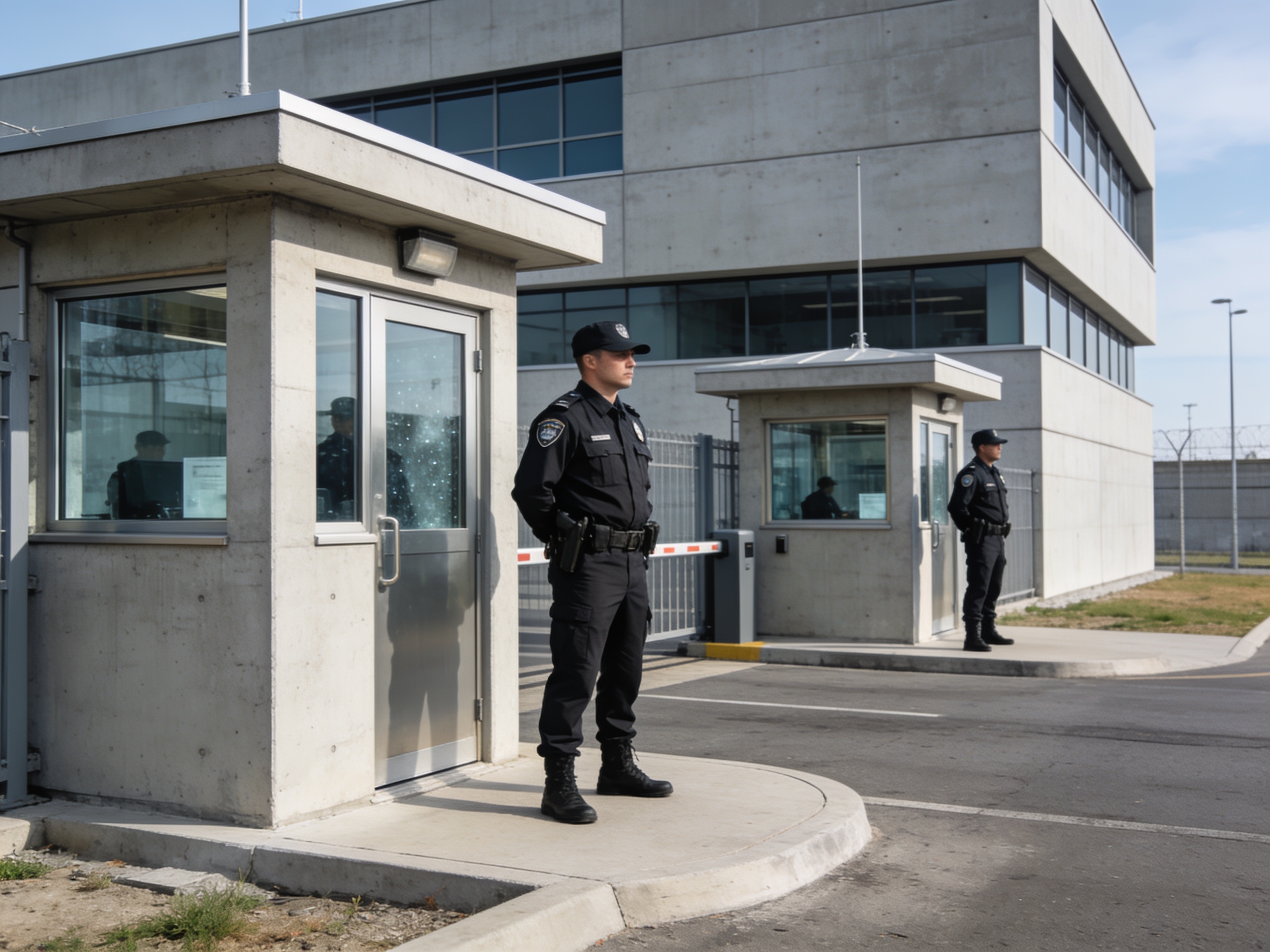
Modular security buildings and guard houses are critical infrastructure for commercial and industrial projects requiring controlled access, asset protection, or personnel safety. These units are designed for rapid deployment and can be configured to meet a wide array of operational demands, from basic gatehouses to advanced surveillance hubs. Typical applications include construction site entry points, logistics hub security checkpoints, remote energy project perimeters, and industrial facility access control in the area. Buyers often specify requirements for ballistic resistance, enhanced thermal insulation for the climate, or integrated communication and surveillance systems. The flexibility of modular construction allows for precise configuration to the intended use and specific site challenges, such as limited access or extreme weather conditions.
Configuration and specification are paramount for effective security buildings. Buyers frequently detail requirements for structural integrity, including wind load ratings suitable for the area, and material choices that withstand heavy use and potential vandalism. Interior layouts can range from a single observation post with basic amenities to multi-room units incorporating restrooms, armories, or data centers. HVAC/MEP specifications are often critical, especially for 24/7 operations or equipment-intensive applications, requiring robust climate control systems that can maintain stable internal temperatures despite external conditions. Fire/life-safety specifications are driven by occupancy and local code requirements supplied by the buyer, often including fire-rated materials, emergency egress, and alarm systems. These units are designed for durability and longevity, serving as a permanent or semi-permanent fixture in challenging environments.
The physical characteristics of security buildings are heavily influenced by their intended destination and deployment. For projects in remote areas or those requiring specialized transport, dimensional and weight constraints are key considerations, impacting everything from module size to material selection. Tough Modular coordinates the production or sourcing of buildings that adhere to these logistical realities. Buyers must consider the long-term operational use, including power requirements for integrated security systems, lighting, and personnel comfort. Scalability is also a factor; some projects may require a single guard house, while others, such as large industrial expansions or temporary facilities during major infrastructure upgrades, might need multiple units deployed strategically across a vast site. The buyer's local professionals are responsible for confirming applicable local codes, ordinances, and authority requirements, and for providing these specifications to Tough Modular for incorporation into the building design.
Practical limitations and tradeoffs are inherent in any modular building project. For security buildings, a key consideration is the balance between customization and cost-efficiency. Highly specialized ballistic ratings or unique architectural features can increase production time and cost. Buyers must also consider the interface between the modular unit and site-specific infrastructure, such as utility connections, data lines, and perimeter fencing. While Tough Modular supplies the building to specification, the integration of these systems on-site falls to the buyer and their local contractors. Understanding these distinctions upfront ensures a smoother project flow and avoids unexpected challenges during deployment. The goal is to provide a robust, fit-for-purpose solution that integrates seamlessly into the broader security strategy of the project.
Technician insight
In the area, the thing that catches most people out with Security Buildings and Guard Houses is often the unexpected demands of local climate on HVAC and insulation. While a standard unit might suffice in milder zones, the sustained heat or cold can quickly compromise comfort and equipment function without robust, oversized systems. We often see buyers underestimating the need for industrial-grade climate control to maintain operational integrity for 24/7 manned stations or sensitive equipment.
Remote Site Access Control Upgrade
A project developing a new industrial facility in a remote part of the area needed a robust, climate-controlled guard house for their main access point. The initial plan was for a basic unit, but after reviewing the operational demands for year-round staffing and integrated surveillance equipment, it became clear the proposed HVAC system was insufficient. Tough Modular worked with the buyer to specify an upgraded, heavy-duty HVAC unit and enhanced insulation, ensuring personnel comfort and equipment reliability, even during peak summer temperatures or winter cold snaps.
Security Buildings and Guard Houses Services We Offer
✓Standard Gatehouse Modules
Pre-engineered, robust gatehouse modules designed for basic access control and security personnel, suitable for construction sites and industrial entrances.
✓Ballistic-Rated Security Booths
Specialized security booths engineered with ballistic-resistant materials, providing enhanced protection for personnel in high-risk environments.
✓Integrated Surveillance & Control Units
Modular units designed to house advanced surveillance equipment, communication systems, and control panels for comprehensive site monitoring.
✓Climate-Controlled Guard Stations
Guard stations equipped with enhanced insulation and robust HVAC systems to ensure comfortable and operational conditions in extreme weather conditions.
✓Multi-Purpose Security Command Centers
Larger modular buildings configured as command centers, integrating offices, meeting areas, and secure storage alongside security operations.
How it works
- 1
Project Requirements Review
We begin by thoroughly reviewing your project's specific needs for security buildings, including intended use, site conditions, operational demands, and any buyer-supplied local code or ordinance requirements. This initial phase ensures a clear understanding of the functional and environmental challenges.
- 2
Building Configuration & Specification
Based on the project requirements, we work with you to define the optimal building configuration, structural specifications, material choices, and integrated systems (e.g., HVAC, electrical, fire/life-safety) that meet your operational and destination needs.
- 3
Commercial Coordination & Agreement
Once the specifications are finalized, we provide a detailed commercial proposal. Upon agreement, we coordinate all aspects of production or sourcing, ensuring the building is manufactured to the agreed-upon design and quality standards.
- 4
Quality Assurance & Logistics
Throughout the production process, we maintain stringent quality oversight. Upon completion, we manage the logistics for delivery, coordinating with you to ensure the modular security building arrives at your designated project site efficiently and on schedule.
Pricing
The cost of modular security buildings and guard houses is primarily influenced by size, complexity of the layout, structural requirements (e.g., ballistic rating, wind load), insulation levels, integrated MEP systems (e.g., advanced HVAC, specialized electrical for surveillance), type of doors and windows, interior/exterior finishes, and the degree of customization. Destination and specific shipping logistics also play a significant role.