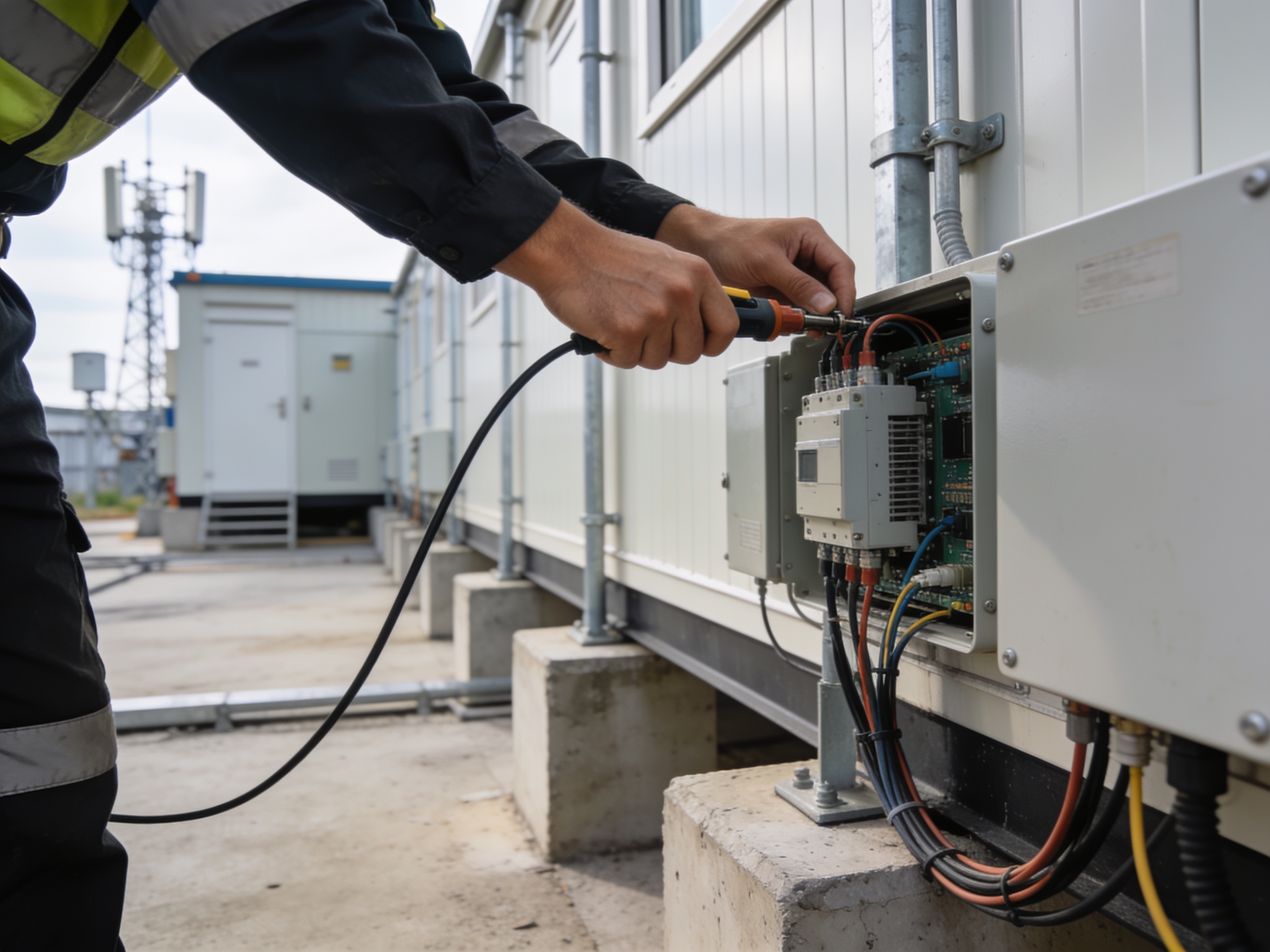
Deploying telecommunications and technical infrastructure in remote or challenging locations requires specialized building solutions that can withstand harsh conditions and meet precise operational demands. Tough Modular provides industrial-grade modular buildings specifically engineered for these applications. From housing critical network equipment in the area's remote industrial parks to providing secure shelters for technical personnel near utility corridors, our solutions are designed for durability and performance. We focus on configuring buildings to accommodate sensitive electronics, power systems, and climate control requirements, ensuring reliable operation even in the face of extreme weather or isolated deployment scenarios. Buyers specify the performance criteria, and we coordinate the production and delivery of units that meet those exacting standards.
The configuration of modular buildings for telecommunications and remote technical sites is highly dependent on the intended use and environmental factors. For instance, a shelter for cellular base stations in the area's more exposed, higher-elevation zones might require enhanced structural integrity to resist high winds and heavy snow loads, while a remote data collection facility near the region's agricultural areas would prioritize stringent dust filtration and precise thermal management. We work with buyers to define structural systems, insulation R-values, and HVAC specifications that address these challenges. Considerations also extend to fire suppression systems, electromagnetic shielding, and robust security features, all integrated into the building's design to protect valuable equipment and ensure continuous operation. The buyer provides the specific requirements, and we ensure the building is manufactured or sourced accordingly.
Material selection and structural design are paramount for longevity and low maintenance in remote technical applications. Our modular buildings utilize heavy-gauge steel framing, corrosion-resistant cladding, and high-performance insulation to protect against the area's variable climate, from humid summers to freezing winters. For sites requiring rapid deployment or frequent relocation, units can be designed for easy transport and reassembly. HVAC/MEP systems are specified to maintain precise internal temperatures and humidity levels, crucial for sensitive electronic equipment, and can include redundant systems for enhanced reliability. Fire/life-safety specifications, such as fire-rated walls and integrated detection systems, are incorporated based on the buyer's detailed project requirements and any applicable local codes for the deployment site, which the buyer is responsible for identifying and communicating.
Transportation and deployment logistics are critical considerations for remote sites. Modular units are designed within standard shipping dimensions where possible to facilitate efficient transport to even the most isolated locations in the area. For larger or more complex projects, multi-module configurations are developed with clear assembly instructions for the buyer's local installation teams. We coordinate the commercial aspects of production and delivery, ensuring units arrive ready for the buyer's local contractors to offload, place on prepared foundations, and connect to utilities. The buyer's local professionals are responsible for all site preparation, permitting, foundation work, utility connections, and final installation, ensuring compliance with local ordinances and project-specific requirements.
Technician insight
In the area, the thing that catches most people out with Modular Buildings for Telecommunications and Remote Technical Sites is underestimating the impact of the region's climate swings on equipment. From the intense summer humidity to the freezing winter temperatures, sensitive electronics need robust, precisely engineered thermal and moisture management systems, not just standard insulation. Ignoring this upfront can lead to costly operational failures and downtime.
Modular Buildings for Telecommunications and Remote Technical Sites Services We Offer
✓Remote Equipment Shelters
Robust, climate-controlled modular shelters designed to house sensitive telecommunications and technical equipment in isolated or harsh environments.
✓Modular Data & Server Pods
Self-contained, secure modular units optimized for housing data servers and networking infrastructure, with integrated cooling and power management.
✓Field Communication Hubs
Deployable modular buildings serving as central communication hubs for remote project sites, providing secure space for radio, satellite, and network gear.
✓Technical Operations Centers
Modular facilities providing secure, climate-controlled environments for technical personnel and monitoring equipment in remote or distributed networks.
✓Generator & Battery Enclosures
Heavy-duty modular enclosures designed to protect generators, battery banks, and power distribution equipment from environmental elements and unauthorized access.
✓Modular Repeater Stations
Compact, durable modular units for housing signal repeater equipment, engineered for reliable operation in challenging and often inaccessible locations.
How it works
- 1
1. Project Requirements Review
The buyer provides detailed project specifications, including intended use, site conditions, climate factors, structural requirements, MEP needs, fire/life-safety considerations, and any applicable local code or ordinance requirements for the deployment location. We review these to understand the full scope of the modular building solution needed.
- 2
2. Building Configuration & Specification
Based on the buyer's requirements, we develop a comprehensive building configuration and specification. This includes defining the structural system, insulation, interior/exterior finishes, doors, windows, and integrated systems (electrical, plumbing, HVAC, etc.) to meet the specified performance criteria. This stage ensures all technical details are aligned with the project's demands.
- 3
3. Commercial Coordination & Sourcing
Once the specifications are finalized, Tough Modular coordinates the commercial aspects of production or sourcing. We manage the manufacturing process or procurement from qualified suppliers, ensuring the building is constructed to the agreed-upon design and quality standards. Throughout this stage, we maintain communication regarding production timelines and milestones.
- 4
4. Delivery Logistics
We arrange for the delivery of the completed modular building to the specified project site. This includes coordinating shipping and transportation logistics. The buyer is responsible for all local site preparation, foundation work, unloading, crane services, utility connections, installation, and any required local inspections or permitting at the destination.
Pricing
The cost of modular buildings for telecommunications and remote technical sites is primarily influenced by the unit's size and dimensions, the complexity of the internal layout, and the quantity of units ordered. Structural requirements, such as enhanced wind or snow load ratings for exposed sites, significantly impact pricing. Insulation R-values, the sophistication of integrated MEP (mechanical, electrical, plumbing) systems, and specialized fire/life-safety features also play a major role. The choice of doors and windows, interior finishes, and exterior cladding materials further refines the cost. Any extensive customization to meet unique operational or environmental demands will increase the overall investment, as will the destination's distance and accessibility, which affect shipping and logistics costs.