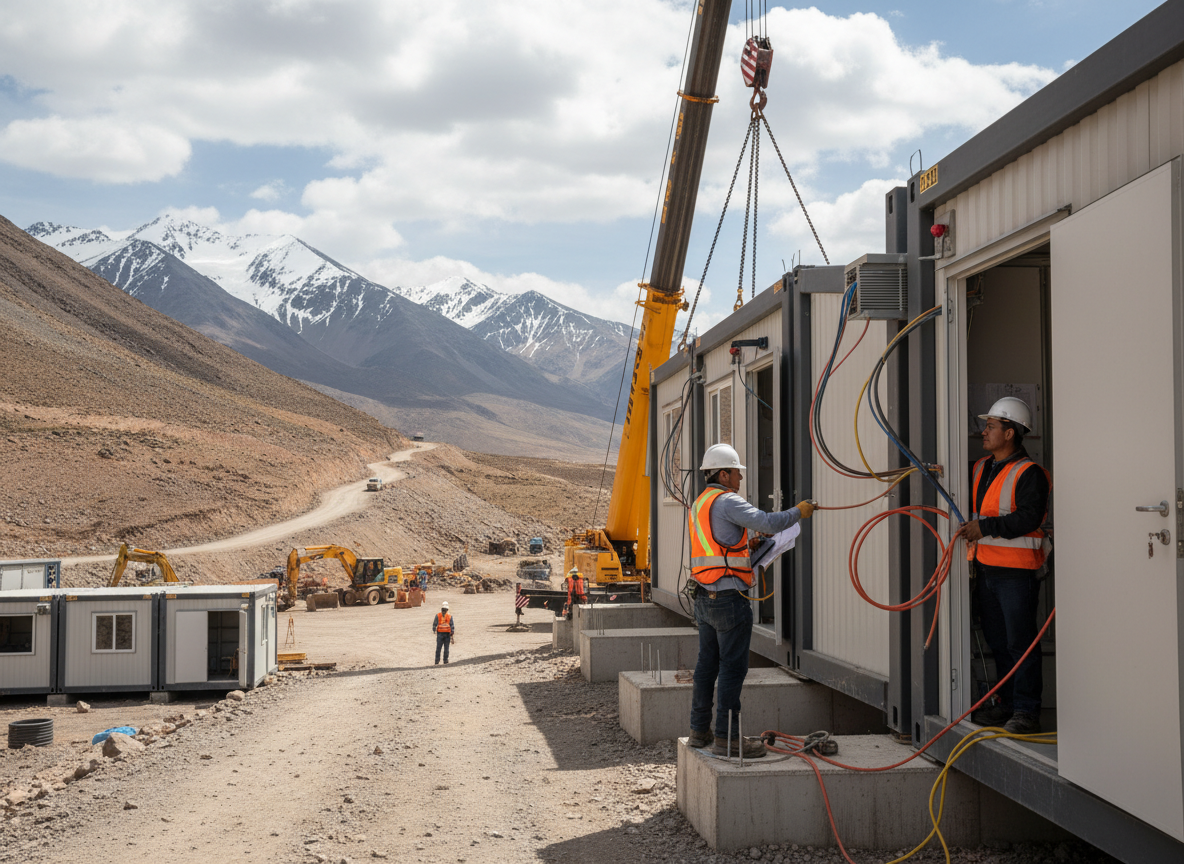
Modular buildings for power and utility projects in the area demand robust construction and precise specification to withstand challenging operational environments and climatic conditions. These structures serve a critical role, from housing sensitive control equipment to providing essential workforce support at remote substations, generation facilities, or transmission line construction sites. Our focus is on configuring and supplying buildings that meet the rigorous demands of the energy sector, considering factors such as structural integrity, specialized MEP requirements, and fire/life-safety protocols. We work with project specifications provided by the buyer, ensuring the modular solution aligns with their operational needs and destination requirements, whether it's a temporary command center or a permanent equipment shelter.
Configuration and specification are paramount for power and utility applications. These projects often require specialized structural systems to accommodate heavy equipment, high wind loads, or seismic activity, depending on the specific site. Insulation and thermal performance are critical for maintaining stable internal temperatures for sensitive electronics or ensuring comfort in extreme heat or cold. HVAC/MEP systems must be specified to handle the unique demands of power generation or distribution environments, including considerations for ventilation, dust control, and uninterruptible power supplies. Fire/life-safety specifications are also crucial, often requiring specific materials, suppression systems, and egress paths tailored to the operational risks inherent in utility infrastructure. We coordinate the production or sourcing of these buildings based on the buyer's detailed project requirements.
Durability and transportation logistics are key considerations for modular buildings destined for power and utility sites. Given the often remote or challenging access to these locations, buildings must be designed for rugged transport and deployment. This includes considerations for dimensional and weight constraints during shipping, especially when traversing rural roads or navigating around existing infrastructure. Project quantities can range from a single specialized equipment enclosure to large-scale workforce camps requiring multiple units, all designed for scalability and efficient deployment. We coordinate the commercial aspects and delivery of these modular units, ensuring they are produced to the buyer's specifications, including any requirements arising from applicable local codes, ordinances, and intended use, which the buyer and their local professionals are responsible for confirming.
Technician insight
In the area, the thing that catches most power and utility project managers out with modular buildings is underestimating the lead time required for highly specialized components, especially for critical MEP systems or fire suppression. The robust structural and insulation demands for our climate, combined with the need to integrate buyer-supplied code requirements, means early and detailed specification is key to avoiding project delays.
Modular E-House for Substation Expansion
A utility company in the area needed a new modular E-house for a substation expansion project to house switchgear and control equipment. The problem was ensuring the structure met specific wind load requirements and integrated specialized HVAC for equipment cooling. We reviewed their detailed specifications, coordinated the design to meet the structural and thermal performance needs, and facilitated the delivery of the E-house, allowing their local contractors to proceed with foundation and utility connections on schedule.
Modular Buildings for Power and Utility Projects Services We Offer
✓Modular Control Rooms
Specialized modular buildings designed to house critical control systems and operational personnel for power generation, transmission, and distribution facilities.
✓Equipment Shelters & E-Houses
Durable, climate-controlled modular enclosures for protecting sensitive electrical gear, switchgear, transformers, and other utility equipment from environmental factors.
✓Workforce Accommodation Units
Robust modular living quarters and support facilities for personnel deployed to remote power and utility project sites, ensuring comfort and safety.
✓Modular Lab & Testing Facilities
Customizable modular buildings configured for onsite testing, analysis, and quality control functions at power plants or utility infrastructure development projects.
✓Security & Gatehouse Modules
Compact, fortified modular units for access control, surveillance, and security personnel at power stations, substations, and other critical utility installations.
✓Temporary Office & Administrative Buildings
Functional modular office spaces and administrative support buildings for project management, engineering, and supervisory staff at utility construction sites.
How it works
- 1
1. Project Requirements Review
We begin by reviewing the buyer's detailed project requirements, including intended use, site conditions, structural demands, and any specific equipment or personnel needs for the power and utility project. This includes understanding the destination requirements and any preliminary specifications provided.
- 2
2. Specification Development & Configuration
Based on the project requirements, we collaborate to configure the modular building specifications. This involves selecting appropriate structural systems, materials, insulation, and outlining MEP and fire/life-safety components to meet the operational and environmental demands of the utility application. Buyer-supplied local code or ordinance requirements are integrated into the building specifications at this stage.
- 3
3. Commercial Coordination & Sourcing
Once specifications are finalized, we coordinate the commercial aspects, including detailed proposals and agreements. We then proceed with the manufacture or sourcing of the modular building, ensuring all components and construction adhere to the agreed-upon specifications and quality standards.
- 4
4. Delivery Logistics
The final stage involves coordinating the delivery of the completed modular building to the project site. We manage the logistics to ensure efficient and safe transport, ready for the buyer's local contractors to handle unloading, site preparation, foundation work, and utility connections.
Pricing
Pricing for modular buildings for power and utility projects is highly variable, primarily influenced by the building's size, quantity of units, and the complexity of its internal layout. Key cost drivers include specialized structural requirements, the level of insulation and thermal performance needed, and the sophistication of MEP systems (e.g., dedicated server cooling, advanced fire suppression). The choice of doors, windows, interior finishes (e.g., chemical-resistant surfaces), and exterior finishes (e.g., heavy-gauge steel siding) also significantly impacts the price. Customization for specific equipment or operational workflows, as well as the destination and associated shipping/logistics, play a crucial role in the final cost. More stringent fire/life-safety requirements also add to the overall investment.