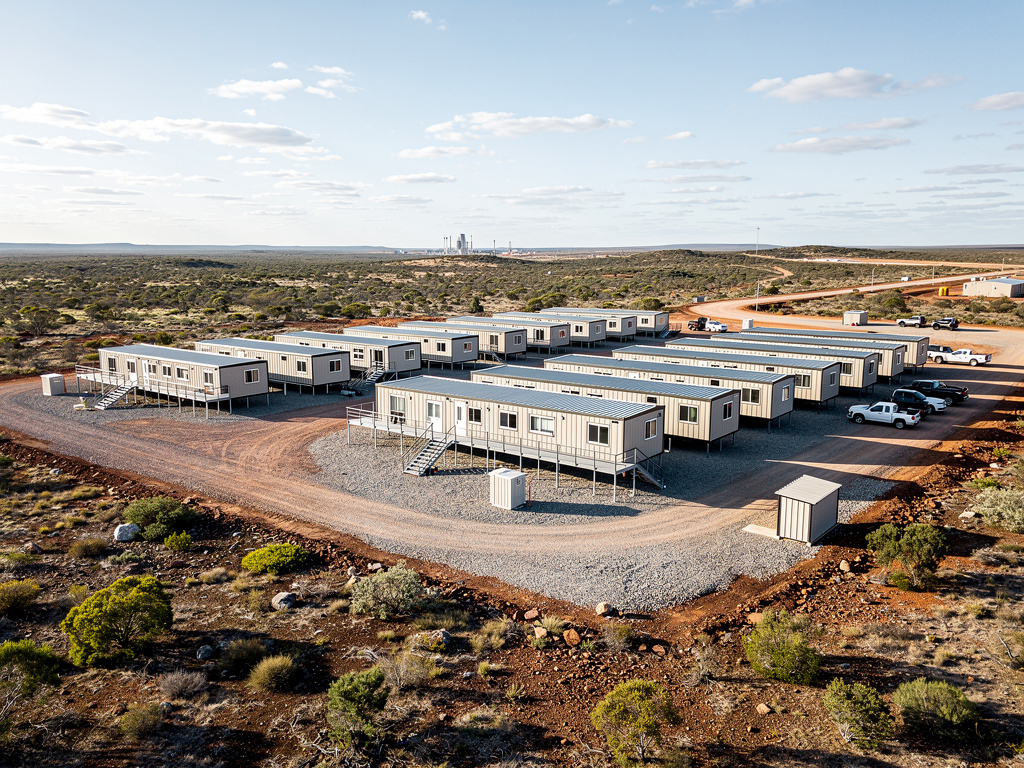
For commercial buyers managing remote projects and FIFO (Fly-In/Fly-Out) operations in the area, Tough Modular provides purpose-built modular buildings designed for durability and specific operational needs. These structures are critical for establishing efficient, self-contained work and living environments in locations often far from established infrastructure, such as mining sites, large-scale construction projects, or resource extraction operations. Our focus is on configuring and supplying modular units that integrate seamlessly into your project's logistics and operational flow, ensuring your workforce has reliable accommodation, administrative, and support facilities.
The configuration of modular buildings for FIFO operations requires careful consideration of intended occupancy, operational use, and deployment requirements. This includes specifying layouts for multi-unit workforce accommodation, administrative offices, medical facilities, or recreation areas. Structural and material options are selected to ensure longevity and resistance to the often-harsh climate conditions prevalent in many remote areas. For instance, enhanced insulation and thermal performance are crucial for maintaining comfortable interior temperatures, reducing energy consumption, and supporting HVAC/MEP systems in extreme heat or cold. We work with buyers to translate their project specifications, including any local code or ordinance requirements, into a robust modular building solution.
Beyond the core structure, MEP (Mechanical, Electrical, Plumbing) and fire/life-safety specifications are paramount for FIFO camps. These systems must be designed to withstand continuous heavy use and often isolated conditions, ensuring reliability and occupant safety. The transportation and shipping constraints to remote sites in the area also heavily influence dimensional and weight considerations for modular units. We coordinate the production or sourcing of buildings that can be efficiently transported to their final destination, often requiring specialized logistics. Buyers must also consider the scalability of their modular camp, planning for potential expansion or reconfiguration as project phases evolve, and ensuring the chosen modular system can adapt to changing needs and quantities.
Practical limitations and tradeoffs are inherent in modular building procurement. For example, while modular construction offers speed and consistency, highly customized layouts or unique material choices can impact production timelines and costs. Buyers must balance their specific requirements against standard modular efficiencies. Furthermore, the buyer is responsible for all local onsite aspects, including site preparation, foundations, utility connections, and securing local permits and approvals. Tough Modular's role is to deliver the specified modular building, ready for the buyer's local contractors to integrate into their project site, ensuring a clear division of responsibilities for a streamlined project execution.
Technician insight
In the area, the thing that catches most people out with Modular Buildings for FIFO Operations is underestimating the logistical challenges and costs associated with transporting large modular units to truly remote sites. It's not just about the distance; it's about road conditions, bridge capacities, and coordinating with local authorities for oversized loads, especially when heading to resource-rich but infrastructure-poor regions.
Modular Buildings for FIFO Operations Services We Offer
✓Multi-Unit Workforce Accommodation
Modular dormitories and living quarters designed for efficient housing of FIFO personnel, offering durable and comfortable environments in remote locations.
✓Modular Administrative & Office Buildings
Purpose-built modular offices and administrative units to support onsite management, planning, and operational oversight for remote projects.
✓Prefabricated Kitchen & Dining Facilities
Robust modular units configured as kitchens and dining halls, essential for providing catering services to large FIFO workforces in isolated areas.
✓Modular Recreation & Welfare Facilities
Durable modular buildings designed for recreation, laundry, and welfare services, enhancing the quality of life for remote FIFO workers.
✓Climate-Controlled Equipment & Storage Buildings
Specialized modular structures providing secure, climate-controlled environments for sensitive equipment, tools, and supplies at remote project sites.
How it works
- 1
1. Project Requirements & Specification Review
We begin by thoroughly reviewing your project's specific requirements, including intended use, occupancy, destination, and any buyer-supplied specifications related to local codes, climate conditions, structural needs, and MEP systems. This ensures a clear understanding of the modular building's purpose and performance criteria.
- 2
2. Building Configuration & Commercial Review
Based on the project requirements, we collaborate on configuring the optimal modular building solution. This includes finalizing layouts, material selections, structural systems, and integrated components. We then provide a detailed commercial proposal outlining the agreed-upon scope and costs.
- 3
3. Production / Sourcing Coordination
Upon agreement, Tough Modular coordinates the production or sourcing of your modular buildings according to the finalized specifications. We manage the manufacturing process to ensure quality and adherence to the agreed design, preparing the units for transport to your project site.
- 4
4. Delivery & Logistics Coordination
We coordinate the delivery of the completed modular buildings to your specified remote destination. This involves managing the logistics of transporting the units, often to challenging locations, ensuring they arrive ready for your local contractors to unload and integrate into your site infrastructure.
Pricing
The cost of modular buildings for FIFO operations varies significantly based on factors such as building size and quantity, layout complexity, structural requirements (e.g., for high wind or snow loads), insulation performance, complexity of MEP systems, fire/life-safety specifications, door and window types, interior and exterior finishes, and the level of customization. Destination and shipping logistics to remote sites also play a substantial role, as does the overall production timeline.