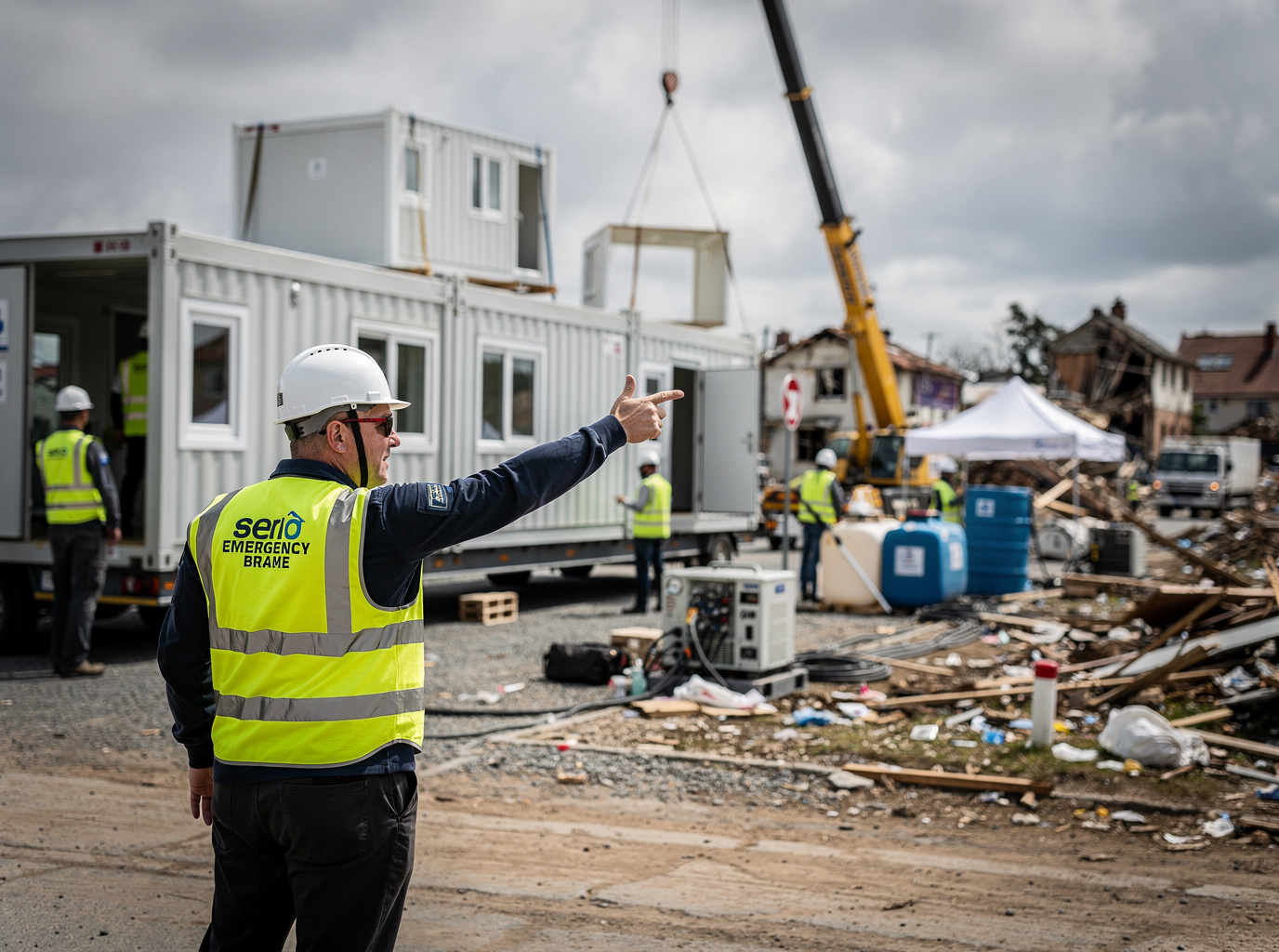
When disaster strikes or an emergency demands immediate infrastructure, modular buildings offer a rapid and effective solution for the Kansas City area. Whether it's establishing temporary command centers near the confluence of the Missouri and Kansas rivers, setting up medical aid stations for a community affected by severe weather, or providing temporary housing for first responders in outlying areas like Liberty or Olathe, Tough Modular understands the critical need for speed and reliability. Our role is to provide the specified modular units, designed for quick deployment and robust performance under challenging conditions, ensuring essential operations can commence without delay. We focus on the building configuration and delivery logistics, allowing buyers and their local teams to manage site preparation and installation.
The configuration and specification of emergency response modular buildings are highly dependent on the intended use and deployment environment. For instance, a temporary field hospital near the Truman Sports Complex would require different MEP specifications and interior finishes than a communications hub in a flood-prone area of North Kansas City. Structural considerations often include enhanced wind load resistance for Missouri's storm seasons, or elevated designs to mitigate flood risks. Material selection prioritizes durability and ease of cleaning, with options for impact-resistant exterior panels and antimicrobial interior surfaces. We coordinate the production or sourcing of these units based on your project's unique requirements, including any specific local code adaptations for the Kansas City metropolitan area that your local professionals identify.
Insulation and HVAC specifications are paramount for occupant comfort and equipment protection, especially given the Kansas City area's climate extremes, from humid summers to freezing winters. Buildings destined for medical or sensitive equipment use may require precise climate control, while temporary administrative offices need robust thermal performance to maintain operational efficiency. Fire/life-safety specifications are critical and are integrated based on the buyer's project requirements and the intended occupancy type, aligning with local fire marshal guidelines as determined by your local professionals. We also consider transportation logistics; units must be designed to safely navigate the region's highways and urban corridors, from I-70 to I-435, ensuring they arrive ready for deployment. Dimensional and weight considerations are factored in during the specification phase to optimize transport efficiency and site placement.
For large-scale emergency responses, project quantities and scalability are key. Tough Modular can coordinate the supply of multiple units, ensuring consistency in specification and timely delivery to various deployment points across the Kansas City area. Whether it's a single command post or a complex of temporary shelters, our process focuses on efficient procurement and delivery. The intended occupancy and operational use dictate everything from interior layouts to security features. We work with buyers to define these parameters, providing a building solution that meets functional demands. Destination and deployment requirements, such as accessibility for heavy equipment or specific site conditions in areas like Lee's Summit or Shawnee, are crucial inputs for building design and delivery planning. We emphasize that buyers are responsible for providing all applicable local code, ordinance, and authority requirements for the final building specifications.
Technician insight
In the Kansas City area, the thing that catches most people out with Modular Buildings for Emergency and Disaster Response is underestimating the lead time required for specialized MEP components and structural enhancements needed to meet local code and climate demands, especially when responding to a sudden event. While the modular concept is rapid, specific fire suppression systems or enhanced wind-load ratings for our storm season need to be factored into the initial specification, not as an afterthought.
Rapid Deployment for Flood Response Command
Following unexpected heavy spring rains causing localized flooding near the Blue River in south Kansas City, a regional emergency management agency needed a temporary command center established within days. They faced challenges with existing infrastructure being compromised and a critical need for a secure, climate-controlled operational hub. Tough Modular worked with their team to specify a multi-unit modular complex, including enhanced communications infrastructure and robust weatherproofing suitable for the conditions. We coordinated the expedited production and delivery of the units, enabling the agency's local contractors to quickly set up the command center and coordinate relief efforts effectively.
Modular Buildings for Emergency and Disaster Response Services We Offer
✓Modular Command Centers
Rapidly deployable, secure modular units designed to serve as central command and control hubs during emergencies, offering robust communication and operational infrastructure.
✓Temporary Medical Facilities
Prefabricated modular buildings configured for emergency medical services, including aid stations, triage centers, or temporary clinics, with adaptable layouts for various healthcare needs.
✓Emergency Accommodation Units
Durable modular housing solutions for first responders, displaced personnel, or essential workers, providing safe and comfortable living quarters in challenging environments.
✓Disaster Relief Offices
Functional and secure modular office spaces for administrative and coordination efforts during disaster response, ensuring continuity of operations for relief organizations.
✓Logistics and Storage Modules
Robust modular units designed for secure storage of equipment, supplies, and logistics operations, critical for efficient resource management in emergency zones.
✓Communications Hub Buildings
Specialized modular structures equipped to house critical communication infrastructure, ensuring connectivity and data transfer during emergency and disaster recovery efforts.
How it works
- 1
Project Requirements Review
We begin by thoroughly reviewing your project's specific requirements for emergency and disaster response in the Kansas City area, including intended use, occupancy, deployment location, and any preliminary specifications you provide. This initial step ensures we understand the critical nature and unique demands of your project.
- 2
Building Configuration & Specification
Based on your project requirements, including any buyer-supplied local code adaptations or climate considerations for the Kansas City region, we work to configure the optimal modular building solution. This involves detailing structural needs, MEP systems, finishes, and durability features to meet the demanding conditions of emergency deployment.
- 3
Commercial Coordination & Agreement
Once the building configuration and specifications are finalized, we provide a detailed commercial proposal. This stage includes coordinating all aspects of the agreement, ensuring clarity on the scope of supply, delivery timelines, and all commercial terms prior to production or sourcing.
- 4
Production or Sourcing Coordination
Upon agreement, we coordinate the production or sourcing of your modular buildings. Our focus is on ensuring the units are manufactured or procured to the agreed-upon specifications, adhering to quality standards suitable for emergency and disaster response applications.
- 5
Delivery to Destination
The final step involves coordinating the delivery of the completed modular buildings to your specified project site in the Kansas City area or beyond. We manage the logistics to ensure timely and safe transport, ready for your local teams to manage the site preparation, unloading, and installation.
Pricing
The cost for modular buildings for emergency and disaster response is primarily influenced by the building's size and quantity, the complexity of the internal layout, and the structural requirements for specific loads or conditions. Insulation and MEP system specifications, critical for Kansas City's varied climate, significantly impact pricing, as do specialized fire/life-safety features. The choice of doors, windows, and interior/exterior finishes also plays a role, with more robust or specialized options increasing costs. Customization levels, destination distance, and shipping logistics are also major factors, as is the urgency of production requirements.