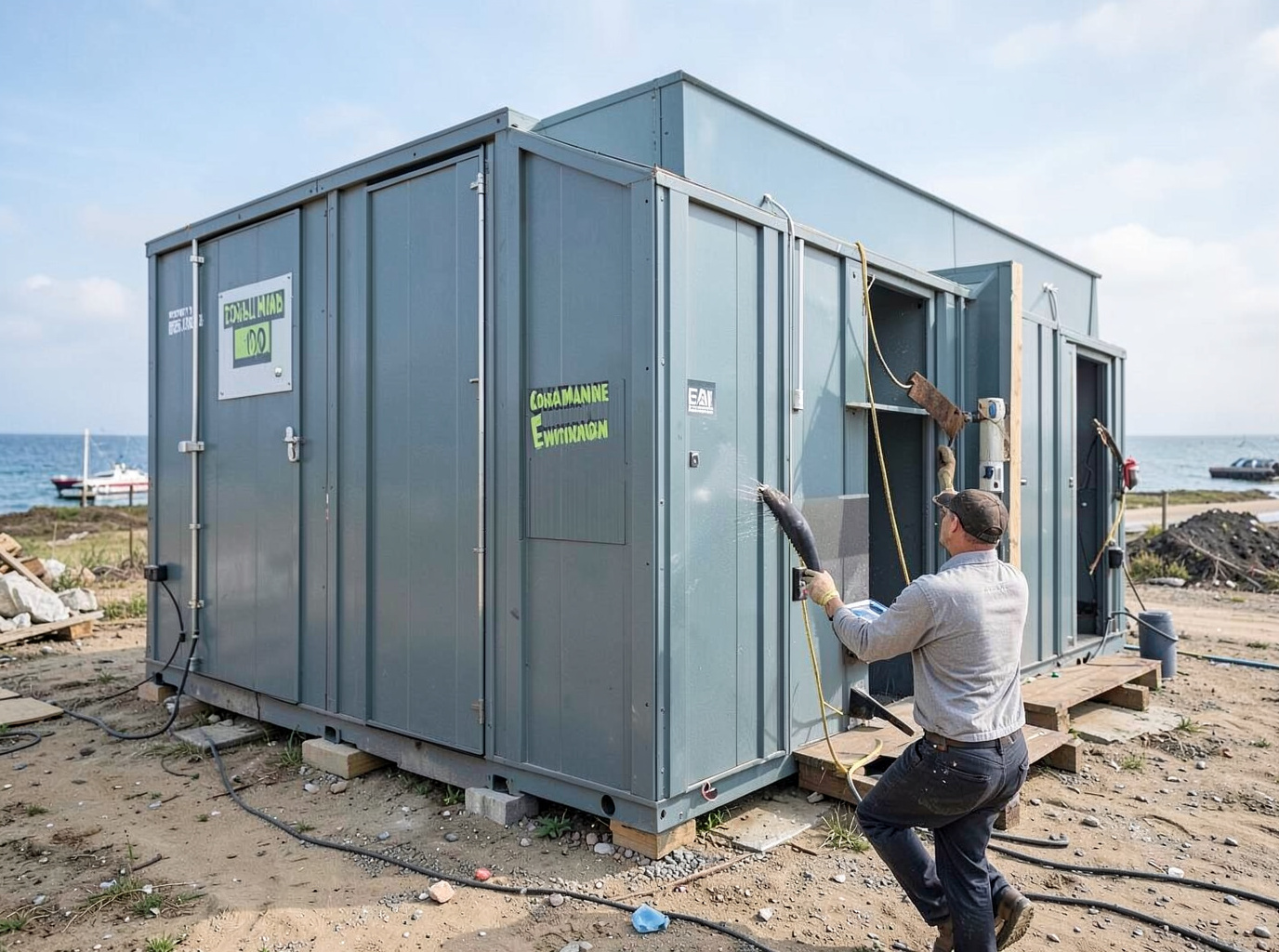
Modular buildings designed for coastal and marine environments face unique challenges, requiring specialized considerations beyond standard construction. These applications often involve offshore platforms, port facilities, remote research stations, and temporary support structures in areas exposed to saltwater, high humidity, strong winds, and corrosive atmospheres. Typical commercial applications include crew quarters, administrative offices, control rooms, laboratories, and specialized equipment shelters. The critical aspect is ensuring the building's integrity and longevity against relentless environmental stressors, which dictates material selection, structural design, and protective coatings. Our role is to coordinate the specification and supply of buildings that meet these rigorous demands, based on your project's specific requirements and destination.
Configuration and specification for coastal and marine modular units must account for extreme conditions. This includes structural systems designed to withstand high wind loads and potential seismic activity, often exceeding inland requirements. Material options commonly feature marine-grade aluminum, galvanized steel, or composite panels to resist corrosion, alongside specialized exterior finishes and sealants. Insulation and thermal performance are critical, not just for occupant comfort, but also for protecting sensitive equipment from temperature fluctuations and condensation in humid conditions. HVAC/MEP specifications often include corrosion-resistant components, sealed systems, and robust filtration to manage air quality and humidity, essential for both human occupancy and equipment operation in these challenging settings.
Fire and life safety considerations are paramount, particularly in remote or offshore locations where emergency response times may be extended. This involves specifying fire-rated materials, integrated suppression systems, and clear egress paths, all in accordance with the buyer's provided project specifications and applicable regulations. Transportation and shipping constraints are also significant, as these modules often need to be moved by sea or specialized heavy-haul transport. Dimensional and weight considerations are critical for logistics, crane operations, and integration onto existing structures or limited sites. We coordinate the production and delivery, ensuring the modules are designed for efficient transport and deployment, while the buyer handles site preparation, unloading, and final installation.
Project quantities and scalability are key benefits of modular construction for coastal and marine projects, allowing for rapid deployment of multiple units or phased expansion. Intended occupancy and operational use heavily influence interior layouts, durability of finishes, and specialized equipment integration. For instance, a laboratory module will have vastly different MEP and finish requirements than a crew accommodation unit. Destination and deployment requirements, including any buyer-supplied local code or ordinance mandates, are integrated into the building's design specifications. Buyers should understand the practical limitations and tradeoffs, such as the balance between customization and production efficiency, or the need for specialized foundations and utility connections that are the buyer's responsibility at the deployment site.
Technician insight
In coastal and marine environments, the thing that catches most people out is underestimating the relentless corrosive power of saltwater and humidity. It's not just about the occasional storm; it's the constant exposure that demands specific material choices and protective coatings, even for seemingly minor components, to ensure longevity and prevent premature failure. Skimping here often leads to costly repairs down the line.
Coastal and Marine Environment Modular Buildings Services We Offer
✓Offshore Accommodation Modules
Durable, self-contained living and sleeping quarters designed for offshore platforms, vessels, and remote marine sites, built to withstand harsh conditions.
✓Coastal Research & Lab Units
Specialized modular units for scientific research and laboratory functions in coastal environments, featuring climate control and corrosion-resistant materials.
✓Port Facility Control Buildings
Robust control rooms and administrative offices for port operations, engineered for high wind loads and corrosive atmospheres common in coastal areas.
✓Marine Equipment Shelters
Protective enclosures for sensitive equipment in marine settings, featuring advanced environmental controls and structural integrity against saltwater and humidity.
✓Temporary Shoreline Support Facilities
Quick-deployable modular buildings for temporary administrative, storage, or welfare functions supporting coastal construction or disaster response efforts.
How it works
- 1
1. Project Requirements Review
We begin by thoroughly reviewing your project's specific needs, including intended use, destination environment, climate considerations, and any buyer-supplied specifications such as local code requirements, structural demands, or MEP system preferences.
- 2
2. Building Configuration & Specification
Based on the requirements, we work with you to define the optimal modular building configuration, material specifications, and system integrations. This includes structural design for high winds or corrosive environments, insulation, HVAC, and interior/exterior finishes.
- 3
3. Commercial Coordination & Proposal
Once the specifications are finalized, we provide a detailed commercial proposal outlining the scope of supply, building specifications, and delivery terms. This stage ensures all aspects are clearly defined before moving to production.
- 4
4. Production or Sourcing Coordination
Upon agreement, we coordinate the manufacturing or sourcing of your modular buildings according to the approved specifications. Our focus is on quality control and adherence to the agreed-upon design and material choices.
- 5
5. Delivery Logistics
We coordinate the delivery of the completed modular buildings to your specified destination. This involves managing the logistics of transport, ensuring the units arrive ready for the buyer's local site preparation, unloading, and installation.
Pricing
The cost of coastal and marine modular buildings is primarily driven by their size, the complexity of the layout, and the level of specialization required for harsh environments. Key factors include the structural demands (e.g., high wind or seismic ratings), choice of marine-grade or corrosion-resistant materials, advanced insulation and vapor barrier systems, and specialized HVAC/MEP components. Customization for specific operational uses, fire/life-safety requirements, and the destination's logistical challenges also significantly influence the overall investment.