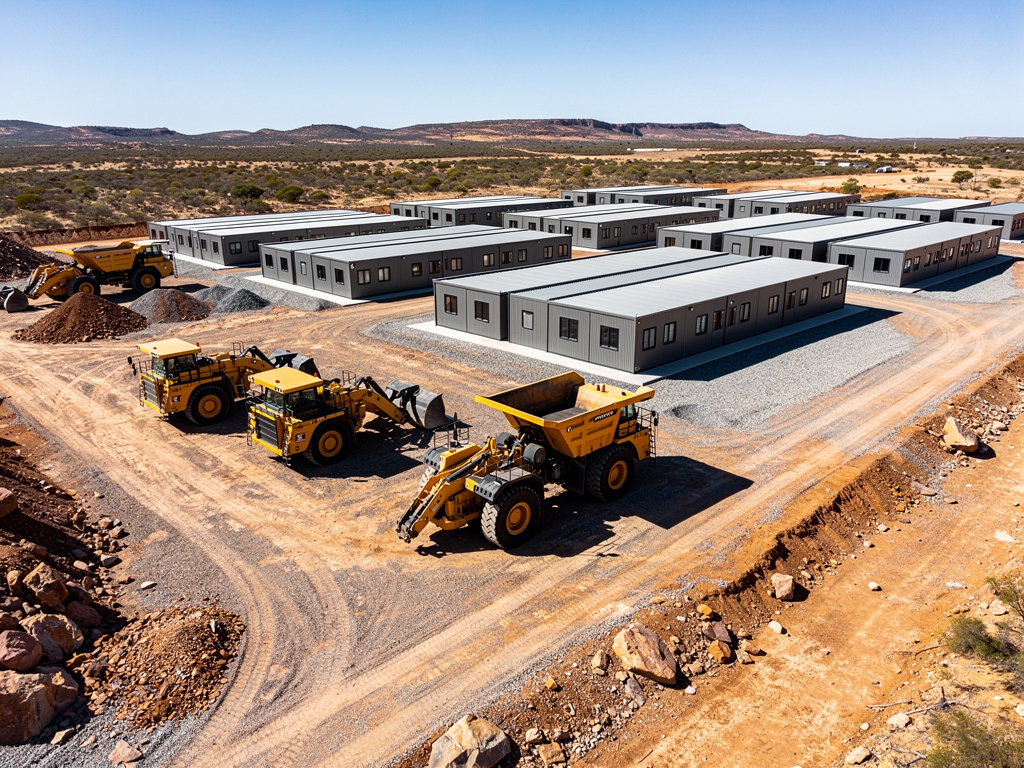
For commercial and industrial projects developing in and around Peru, modular buildings offer a strategic advantage for rapid deployment and adaptable facility solutions. Whether supporting new agricultural processing plants, expanding logistics operations near major transport routes, or establishing temporary administrative offices for infrastructure upgrades, modular construction provides a scalable and efficient alternative to traditional builds. The ability to quickly establish functional spaces minimizes downtime and supports project timelines critical for ventures in the Peru area.
Projects in Peru, particularly those related to resource extraction, agricultural expansion, or manufacturing, often require robust and rapidly deployable infrastructure. Modular buildings are ideal for creating workforce camps, temporary offices, equipment shelters, and specialized laboratory spaces. Their off-site construction reduces on-site disruption, which is particularly beneficial in areas with limited laydown space or where maintaining operational continuity is paramount. This approach allows project managers to focus on core activities while essential facilities are manufactured and delivered.
When specifying modular buildings for projects in Peru, buyers can detail their exact requirements, including considerations for local climate conditions, structural needs, and utility connections. This ensures that the supplied modules are tailored to perform optimally in the specific operational environment. Buyers work with their local contractors and professionals to manage site preparation, foundations, utility hook-ups, and final installation, ensuring all local codes and project-specific demands are met for a seamless integration into the Peru project landscape.
Around Peru
We regularly work near:
- 📍Peru Industrial Park
- 📍Illinois Route 251
- 📍Illinois River Bridge (US 6)
- 📍St. Bede Academy
- 📍Matthiessen State Park
- 📍Starved Rock State Park
Modular Buildings in Peru — Local Notes
- •Given Peru's agricultural and industrial presence, modular buildings can be designed with enhanced air filtration or specialized HVAC systems to manage dust or process-related airborne particulates, ensuring a comfortable and safe internal environment for workers and sensitive equipment.
- •The logistical considerations for delivering large modules to sites within Peru or its surrounding rural areas may necessitate careful planning for freight access. Module dimensions can be optimized during specification to navigate local road networks and site entry points efficiently.
- •For projects in remote areas of Peru, the self-contained nature of modular workforce camps, including integrated power generation and wastewater treatment options, can be a significant advantage, reducing reliance on developing extensive local infrastructure.
- •Projects requiring rapid expansion or relocation in Peru, such as seasonal agricultural support facilities or temporary construction offices for road improvements, benefit from the inherent reconfigurability and portability of modular structures, allowing for efficient redeployment.