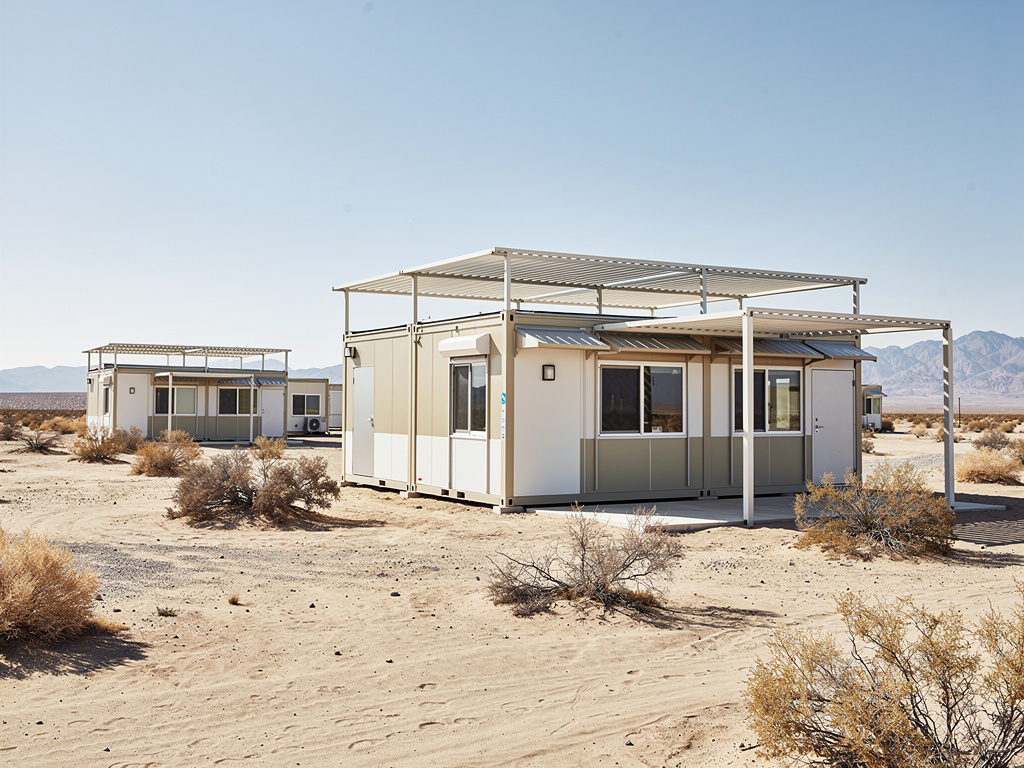
For commercial and industrial projects across Argentina, modular buildings offer a practical solution for rapid deployment and adaptable infrastructure. Whether supporting mining operations in the Andes, agricultural processing facilities in the Pampas, or energy sector projects in Patagonia, modular construction provides a scalable and efficient alternative to traditional builds. The ability to specify buildings for diverse climate zones, from the subtropical north to the subpolar south, is a key advantage. Buyers in Argentina can specify modular buildings to meet unique project requirements, including considerations for seismic activity, high winds, or extreme temperature fluctuations, ensuring suitability for demanding operational environments.
Tough Modular specializes in providing durable modular buildings designed for challenging project sites. In Argentina, this is particularly relevant for supporting ventures in remote areas, such as resource extraction in the Cuyo region or infrastructure development along the Paraná River. These buildings are ideal for establishing workforce camps, administrative offices, equipment shelters, or specialized industrial facilities where on-site construction is impractical or time-consuming. Buyers can specify designs that account for local logistical challenges, including access to project sites via major freight corridors like Ruta Nacional 9 or Ruta Nacional 3, and the need for robust structures capable of enduring the country's varied geographical and climatic conditions.
Around Argentina
We regularly work near:
- 📍Obelisco de Buenos Aires
- 📍Puente de la Mujer
- 📍Casa Rosada
- 📍Teatro Colón
- 📍Cementerio de la Recoleta
- 📍Caminito
Modular Buildings in Argentina — Local Notes
- •Climate Extremes: Projects in Argentina often face a wide range of climate conditions, from the arid Chaco to the humid Atlantic coast and the cold Patagonian steppe. Modular buildings can be specified with enhanced insulation, HVAC systems, and material selections to perform reliably in these diverse environments.
- •Remote Site Access: Many industrial and resource projects are located in remote areas with challenging access. The ability to transport factory-built modules, potentially in sections for assembly on-site, simplifies logistics compared to moving all construction materials and labor to isolated locations.
- •Logistical Considerations for Delivery: Argentina's extensive geography and varied road networks mean that planning for module transport is crucial. Buyers need to consider the dimensions and weight of modular units in relation to major freight routes and potential last-mile challenges to project sites.
- •Workforce Accommodation Requirements: Large-scale projects, particularly in mining, energy, and infrastructure, often require substantial temporary workforce housing. Modular camps can be configured to provide comfortable, safe, and efficient living and support facilities for hundreds of personnel, designed for rapid deployment and potential relocation.